
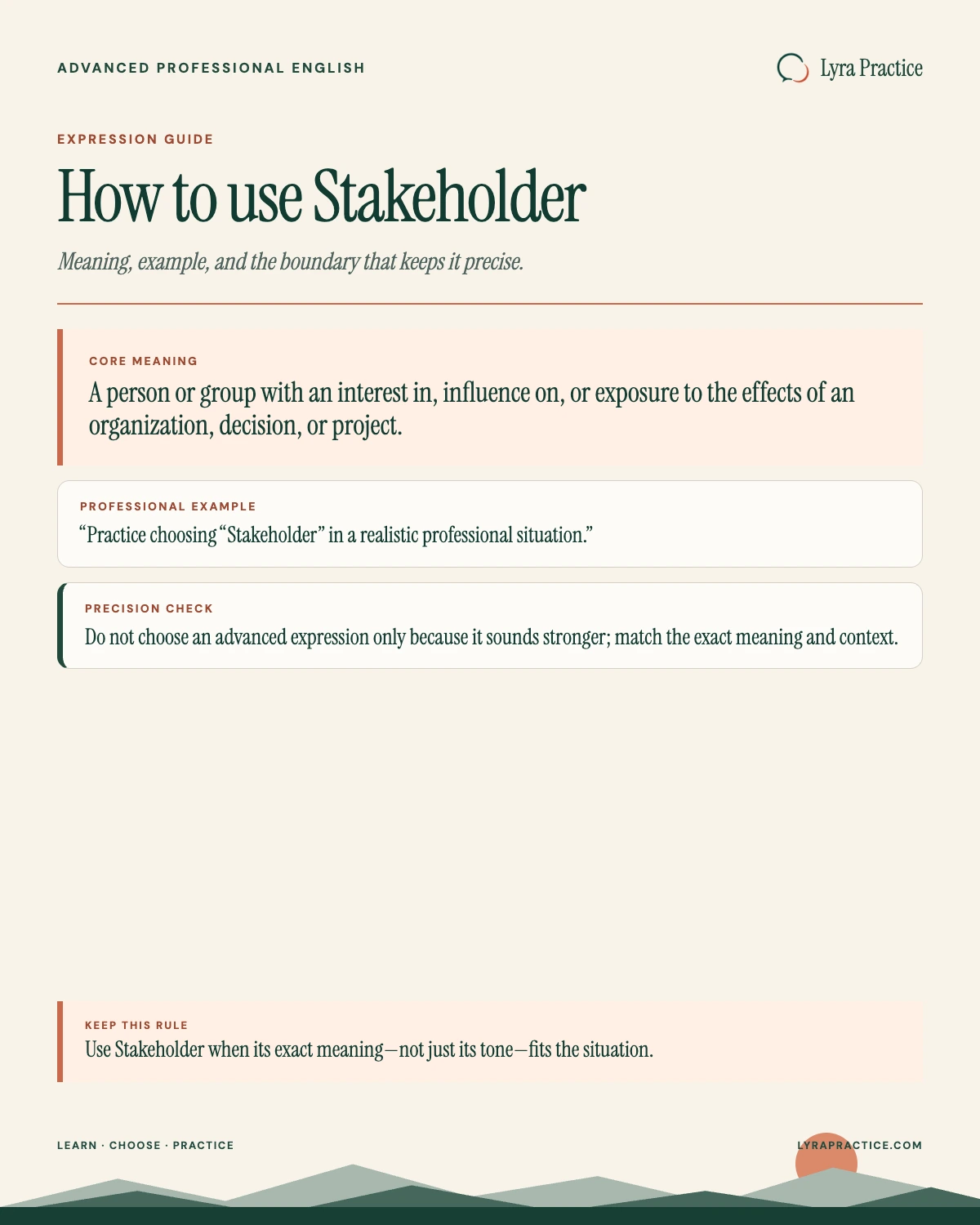
A stakeholder is a person or group with an interest in, influence on, or exposure to the effects of an organization, decision, or project.
The word is broader than shareholder and different from decision-maker. A stakeholder may be affected by a decision without owning shares or having final authority over it.
"The project lead consulted the teams affected by the new workflow as key stakeholders."
Those teams matter because the workflow affects them. The sentence does not claim that they own the company or make the final decision.
Quick check
How well do you know "Stakeholder"?
You know "Stakeholder" well.
Keep going with the full learning path — more workplace contexts, related expressions, and practice using it yourself with feedback.
Continue with "Stakeholder" →There's more to "Stakeholder" than it seems.
You've got part of it, but the full learning path goes deeper into its nuances, workplace contexts, and when it sounds natural — then gives you practice using it yourself.
Learn "Stakeholder" in depth →Who can be a stakeholder?
Stakeholders can sit inside or outside an organization. Employees, teams, leaders, customers, suppliers, investors, and local groups may all be stakeholders when they have a relevant interest, influence, or exposure.
The category depends on the decision or project. A person may be a stakeholder in one discussion but not another.
"Employees and customers are stakeholders in the service redesign."
Employees may need to work with the redesigned service. Customers may experience its effects. Each group has a different connection to the same project.
This is why a broad phrase such as the stakeholders can be too vague. When the distinction matters, name the group:
"We consulted support agents and enterprise customers about the new workflow."
The specific nouns tell the reader who was involved. They also avoid implying that every affected group had the same interest or authority.
Try it yourself
Use "Stakeholder" yourself
Stakeholder vs shareholder
A shareholder owns shares in a company. A shareholder is therefore a stakeholder, because the company's decisions can affect that ownership interest.
Many stakeholders, however, own no shares. An employee, customer, supplier, or affected community can have a meaningful stake without being a shareholder.
"The investor is both a shareholder and a stakeholder."
Use shareholder when ownership is the relevant fact. Use stakeholder when the wider relationship to an organization, decision, or project is the point.
Stakeholder vs customer or decision-maker
A customer is a buyer or user. Customers may be stakeholders when a decision affects their access, experience, cost, or outcome. The words are not interchangeable: customer names the commercial role, while stakeholder names the relationship to the matter under discussion.
A decision-maker has authority to decide. A stakeholder may influence a choice, provide information, bear its effects, or raise concerns without controlling the final decision.
Avoid writing stakeholder approval when the group only gave input. Name the actual action instead: the team consulted customers, Finance reviewed the estimate, or the sponsor approved the plan.
Natural patterns with stakeholder
Common professional patterns include:
- key stakeholder
- internal and external stakeholders
- stakeholders in a project or decision
- consult stakeholders
- stakeholder concerns
- stakeholder impact
Examples:
"The brief separates internal and external stakeholders."
"The team documented stakeholder concerns before revising the proposal."
"The report describes the stakeholder impact of the change."
Practice scenarios
Practice using stakeholder in situations like:
- naming the groups affected by a project
- separating ownership from a broader interest in a decision
- distinguishing people who provide input from people with final authority
Useful practice phrases:
- "The key stakeholders in this decision are ___."
- "We consulted [specific group] because ___."
- "[Group] is affected by the change but does not have final approval authority."
Related guides
- How to Align Stakeholders Before a Project Decision
- How to Explain a Decision to Stakeholders in English
- How to Report Stakeholder Pushback Neutrally
Stakeholder is a useful category, but specificity matters. Name the affected or influential group whenever the broad label would hide who they are or what authority they have.
Want to actually use "Stakeholder" naturally at work?
Understanding it is one thing. Practice its nuances, see how it works in real workplace situations, and use it yourself with feedback.
Start the "Stakeholder" learning path →