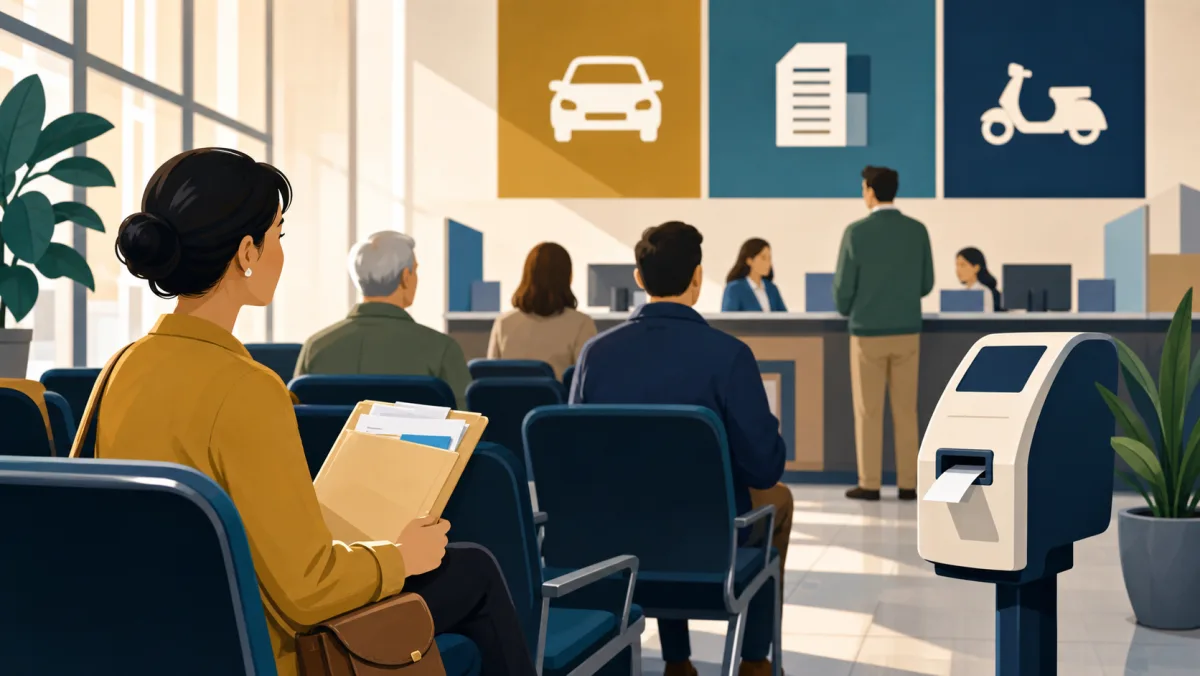
In some US conversations, the DMV is shorthand for a slow or confusing process. This stereotype comes from visits to state motor-vehicle offices. It does not describe every agency or visit.
"Getting all three departments to approve this feels like a trip to the DMV."
The speaker is not discussing a driver's license. The comparison suggests a process that feels slow, impersonal, or hard to follow.
What does DMV stand for?
DMV commonly stands for Department of Motor Vehicles. State agencies handle driver's licenses, ID cards, vehicle titles, and registration. The exact division of work varies.
The official name and structure vary by state. A state may use DMV, MVA, MVD, BMV, or another name. Driver and vehicle services may also sit in different agencies.
People may still use DMV as a broad label, but recognition varies by speaker and place.
Around Washington, DC, the DMV can also mean the District of Columbia, Maryland, and Virginia region. “I work in the DMV” may use this regional sense. “I have to go to the DMV” usually names a motor-vehicle office.
Why does the DMV appear in jokes?
The common stereotype combines several frustrations:
- waiting in line
- completing forms
- bringing several identity or residency documents
- discovering that a document is missing
- taking a vision, written, or driving test
- interacting with rules that vary by state
- waiting for a number to be called
US movies, television, comedy, and personal stories have repeated this image.
Actual service can be quick, online, or easy. The joke relies on a familiar image, not a fair review of each office. Some listeners may not recognize it.
A lot to take in? It is.
But Rome wasn't built in a day. Build your American workplace English one expression and cultural reference at a time—with curated explanations and structured practice in Lyra Practice.
Start a session →What does a DMV comparison imply?
"The onboarding process has become our internal DMV."
This suggests queues, repeated steps, or too much paperwork.
"The waiting room had strong DMV energy."
DMV energy is an informal joke about a place that feels dull, crowded, slow, or impersonal.
"I spent my entire lunch break at the DMV."
This may be literal. Context shows whether DMV names an office or makes a comparison.
Is the joke about government employees?
Some speakers blame staff, but the broader joke often targets the process. It may point to waiting, forms, rules, or limited control.
At work, compare the process, not a person or group, to the stereotype.
Safer:
"Our expense approval flow is starting to feel like the DMV."
More insulting:
"The operations team acts like DMV workers."
The second insults a group of workers through a negative stereotype.
What background knowledge does the joke assume?
For some Americans, learning to drive is linked with independence. Motor-vehicle offices may appear during major events. These include getting a first license, moving states, or registering a car.
Those events can give the office cultural weight. Yet driving, agency contact, and personal experience vary widely.
A listener may know the words but miss the joke. The expected scene includes forms, documents, a queue, and a numbered turn. That scene is a stereotype, not a rule.
How to use the reference
The comparison is informal and negative. It may work in humor when listeners know the reference. In a formal review, name the real problem: long waits, repeated checks, unclear rules, or poor design.
Informal:
"Why does resetting a password feel like going to the DMV?"
Formal:
"The reset process requires three duplicate identity checks and has a two-day response time."
The first uses a cultural shortcut. The second gives details people can act on.
For a different American institution hidden inside workplace language, see Monday-morning quarterback meaning. For an expression about repeatedly reliving the same frustrating process, see what a Groundhog Day reference means.