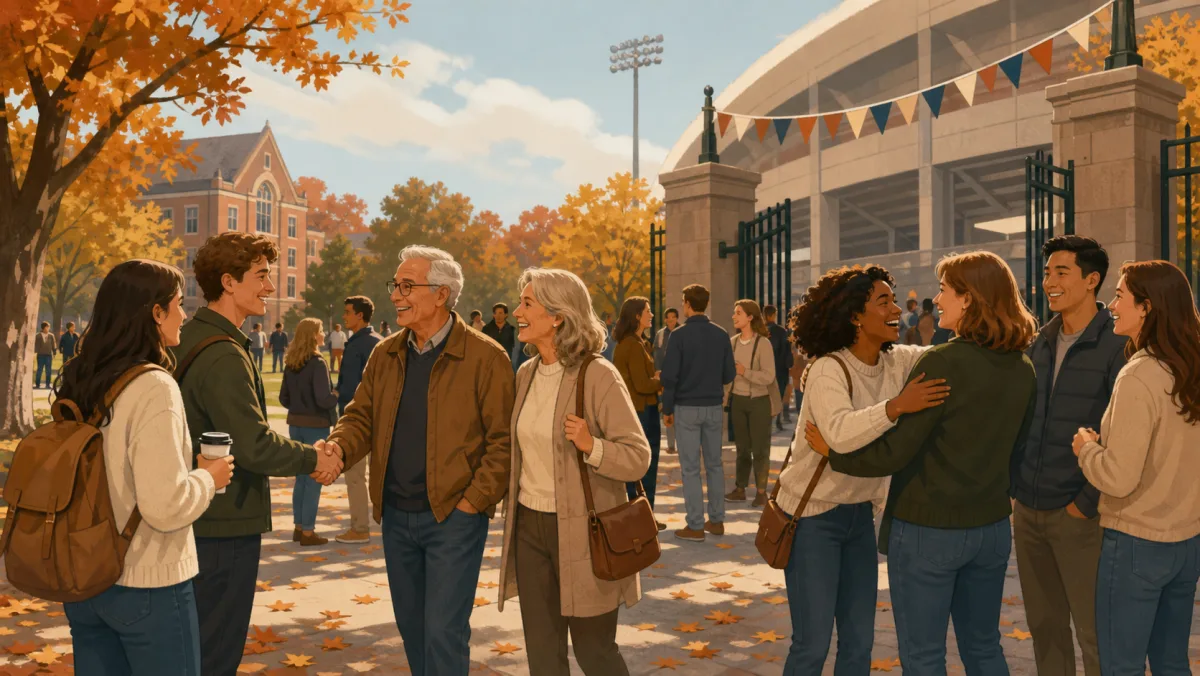
At many American colleges, homecoming welcomes alumni back to campus. Current students, families, and fans may also join the events. At many high schools, homecoming centers more on current students and school spirit. It may include a game, themed activities, and a dance.
The name reflects the idea of former students coming home to their school. In workplace talk, it can also suggest a reunion or warm return. Each school may do it differently.
What happens during homecoming?
At many universities, homecoming lasts a weekend or a full week. Events may serve students, alumni, families, and fans. A football game can be central at schools with strong sports traditions. Other events may include concerts, reunions, fundraisers, tailgates, and department gatherings.
At many high schools, homecoming combines a fall game with a dance. A themed spirit week may lead up to it. Students might wear school colors, decorate hallways, or attend a pep rally. Alumni may join, but current students often receive more attention.
These are common patterns, not requirements. Traditions vary by region, school size, funds, and staff. Some schools focus on alumni, while others focus on the game or dance. A school may have no football team, court, or homecoming event.
School records show how these events change. The University of Minnesota records both a game and dance in 1914. Its events have continued to change over time.
Homecoming court, king, and queen
Some schools select a homecoming court. They may recognize a king, queen, or other student representatives. Schools may use votes, forms, service, or school activities.
These traditions are not universal. Titles and rules for taking part differ. Some schools also use less gendered forms. Movies often make the court a story about status and popularity. That image does not represent every school or student.
A lot to take in? It is.
But Rome wasn't built in a day. Build your American workplace English one expression and cultural reference at a time—with curated explanations and structured practice in Lyra Practice.
Start a session →Homecoming vs prom
Both events can involve dances and formal clothes, but their purposes differ.
- Prom is usually a spring formal dance for older high school students.
- Homecoming is a school-spirit or reunion tradition, often held in the fall.
Colleges often hold homecoming, while prom usually refers to high school. A homecoming dance may be less formal than prom. Individual schools still set their own customs.
What might you hear at work?
"The annual sales meeting is a homecoming for people who started their careers here."
The speaker means that former colleagues or long-serving employees meet again.
"Her first day back at headquarters felt like a homecoming."
This suggests a warm return to a place and group she knows.
"Half the team is traveling for homecoming this weekend."
Here, the meaning is likely literal. Colleagues may be visiting a former school or seeing old friends.
In recruiting or alumni work, homecoming may be a useful calendar reference. A recruiter might plan an event when many students and alumni are present.
What could you say naturally?
You can use homecoming when there is a genuine return or reunion:
"Bringing the original product team back for the anniversary made it feel like a homecoming."
"Is homecoming mainly an alumni event at your university, or is it more about football?"
"I didn't grow up with homecoming. What part of the weekend do people usually attend?"
The last two questions let you join the conversation without claiming shared experience. They also invite the other person to explain the local tradition.
Do not assume every American attended a football-centered school or feels nostalgic. School experiences differ widely, and some people do not wish to return.
Recognition before production
At work, homecoming is usually a literal event or warm metaphor. It can suggest alumni, reunion, school spirit, or fall football.
Context usually reveals the main idea. “A homecoming for the founders” emphasizes reunion. “It felt like a homecoming” suggests a warm return. “Homecoming weekend traffic” is probably literal.
For the related game-day gathering, read what tailgating means before a sports game. To understand the dance that is often confused with homecoming, see prom, prom king, and prom queen explained.