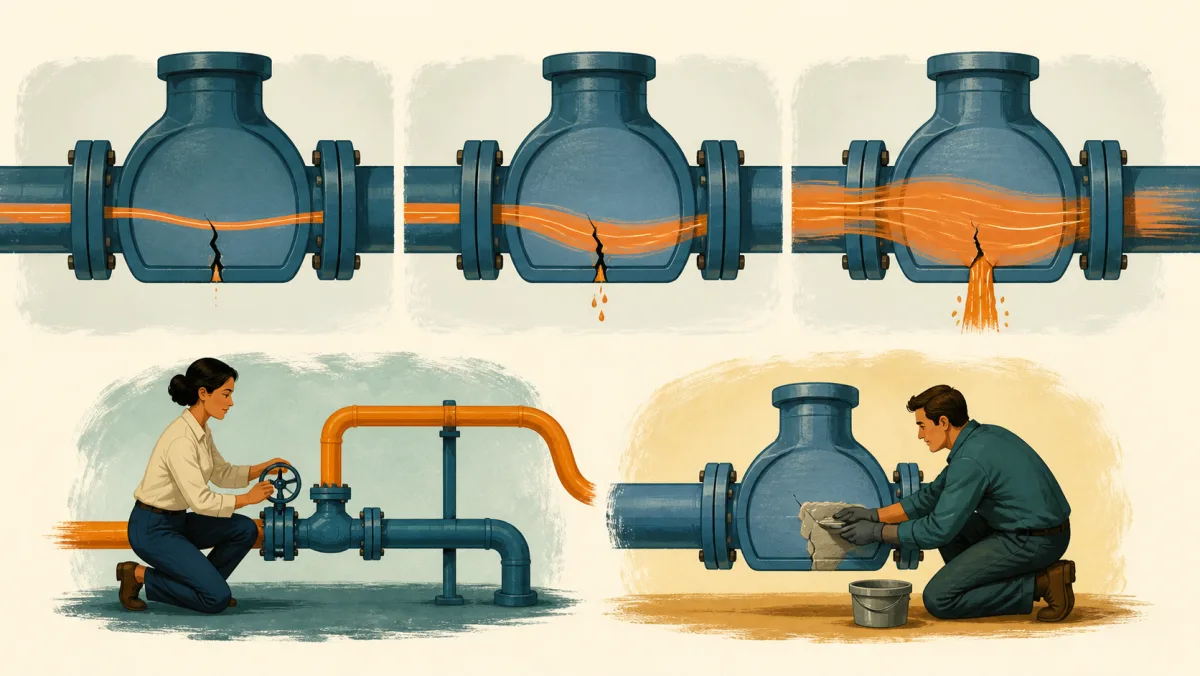
Exposure and vulnerability describe related but different facts. A vulnerability is a weakness that could lead to harm. Exposure describes who or what is subject to a risk, or the amount that could be affected.
Quick check
How well do you know "Exposure"?
You know "Exposure" well.
Keep going with the full learning path — more workplace contexts, related expressions, and practice using it yourself with feedback.
Continue with "Exposure" →There's more to "Exposure" than it seems.
You've got part of it, but the full learning path goes deeper into its nuances, workplace contexts, and when it sounds natural — then gives you practice using it yourself.
Learn "Exposure" in depth →A property of you vs. a current degree of contact
A vulnerability can exist even when no threat is active. Reliance on one supplier or an outdated login system can be a weakness. In safety or security, exposure may mean being subject to a hazard or threat. In finance, it may mean the amount at risk. Exposure can change while the weakness remains.
"Using only one supplier is a vulnerability. The share of this quarter's output that depends on it shows our exposure."
"The outdated login system is a vulnerability. Our exposure depends partly on which accounts and systems still rely on it."
"A supply review named reliance on one supplier as a vulnerability. It then measured the amount of business at risk."
The last example gives each term a separate job. The report names the weakness. It then measures the amount that could be affected. That amount may change each quarter even if the weakness remains.
Try it yourself
Use "Exposure" yourself
The common mistake: treating them as the same fact
The common mistake is treating the terms as the same fact. A weakness can exist when contact with a threat is low. Exposure can also rise or fall while the weakness remains. A security team might fix an old login system. Or it might reduce use of that system while a fix is under way.
The right term helps you suggest an appropriate action. Limiting exposure may reduce risk without removing the weakness. Fixing a vulnerability addresses the weakness, but other sources of risk may remain. A report should state which issue an action addresses.
Practice scenarios
Practice using exposure when you are:
- separating a system weakness from the users or assets that may be affected
- explaining why fixing a weakness differs from limiting contact with it
- measuring the amount of business at risk from one supplier
Useful practice phrases:
- "That is a vulnerability. Our current exposure is [amount or degree]."
- "We can limit exposure now and fix the weakness in a separate step."
- "The weakness remains, but the amount at risk changes each quarter."
Want to actually use "Exposure" naturally at work?
Understanding it is one thing. Practice its nuances, see how it works in real workplace situations, and use it yourself with feedback.
Start the "Exposure" learning path →A vulnerability identifies a weakness. Exposure identifies who, what, or how much may be affected. Both can change over time.