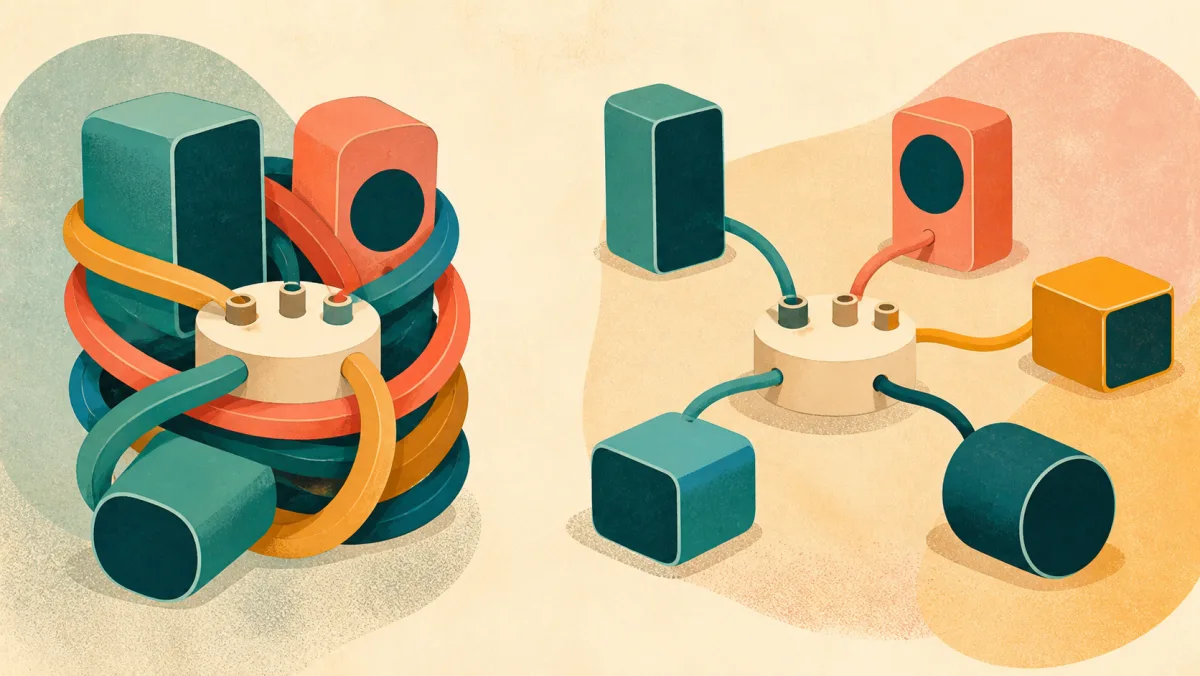
Before a noun, "platform-agnostic" is usually hyphenated. In "a platform-agnostic application," the hyphen helps readers treat both words as one modifier. A house style may allow an open form when the meaning is clear. So this rule is not the same for every publisher.
After a linking verb such as "is" or "remains," an open form is often natural: "the application is platform agnostic." The hyphenated form is also common in technical writing. Follow your house style. Use one form throughout.
Quick check
How well do you know "Agnostic"?
You know "Agnostic" well.
Keep going with the full learning path — more workplace contexts, related expressions, and practice using it yourself with feedback.
Continue with "Agnostic" →There's more to "Agnostic" than it seems.
You've got part of it, but the full learning path goes deeper into its nuances, workplace contexts, and when it sounds natural — then gives you practice using it yourself.
Learn "Agnostic" in depth →The pre-noun rule is firm
A common editing choice is a hyphen in "platform-agnostic solution." It shows that the two words work together to modify solution. The hyphen helps readers see them as one modifier.
- Preferred: "We built a vendor-agnostic review process."
- Often edited: "a vendor agnostic review process."
This pattern is the safest choice in technical reports, client emails, and other edited prose. Still, a publisher's style guide may set a different rule.
After a linking verb, the rule is softer
After a linking verb, compounds are often left open. Thus, "the interface is technology agnostic" is standard in many styles. The form "the interface is technology-agnostic" is also common, mainly when the term is treated as a set technical label. Neither form changes the design claim. Pick one form based on house style and use it consistently.
- Two common forms: "The interface is technology agnostic" and "the interface is technology-agnostic." Check the style used in the same document.
Try it yourself
Use "Agnostic" yourself
A separate, unrelated mistake: stacking objects
When you name more than one object, a long compound such as "cloud-and-vendor-agnostic" can be hard to read. A rewrite is often clearer.
- Clearer: "the platform does not depend on one cloud provider or vendor."
- Denser: "a cloud-and-vendor-agnostic platform."
Remember the usual pattern: hyphenate before a noun, and consider an open form after a linking verb. Then check the relevant style guide. Grammar alone does not show whether the product truly works across platforms.
Practice scenarios
Practice using agnostic in situations such as:
- applying the usual hyphen before a noun
- checking house style after the verb "is"
- rewriting a long compound as a clear clause
Useful practice phrases:
- "a [noun]-agnostic solution (usually hyphenated before the noun)"
- "the platform is [noun] agnostic (often open after the verb)"
- "does not depend on [noun] or [noun] (a clear rewrite)"
Want to actually use "Agnostic" naturally at work?
Understanding it is one thing. Practice its nuances, see how it works in real workplace situations, and use it yourself with feedback.
Start the "Agnostic" learning path →The usual form before a noun has a hyphen. After a linking verb, both forms occur. House style decides close cases.