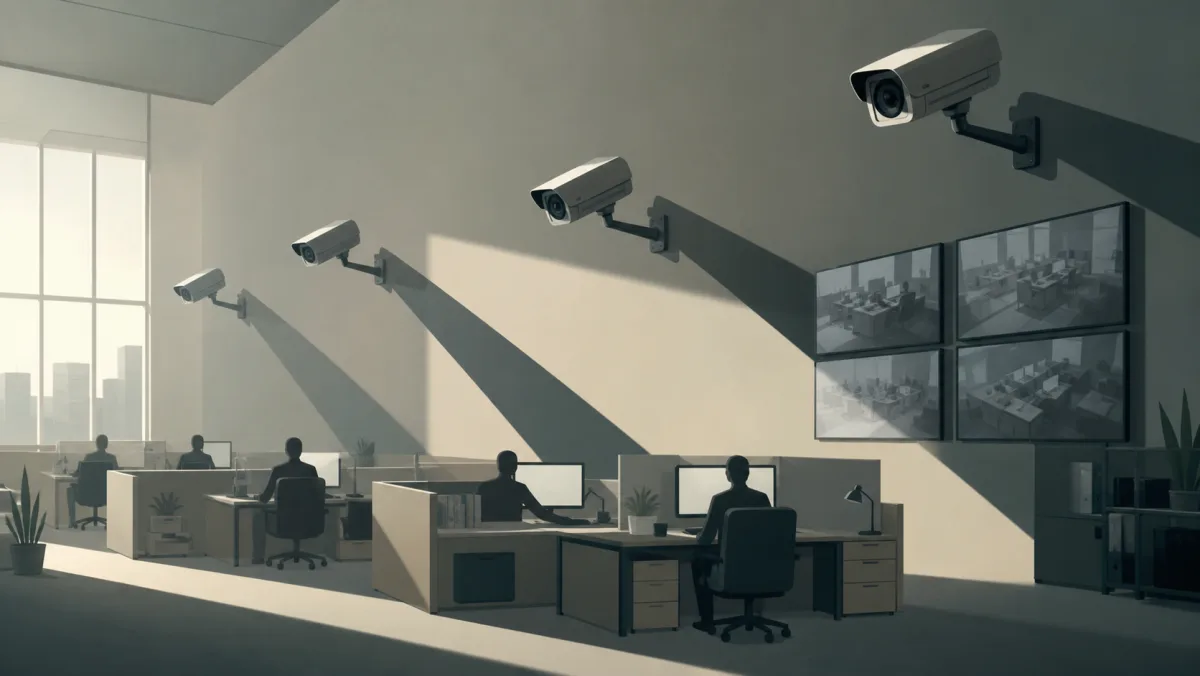
“Big Brother is watching” suggests surveillance by a powerful authority. It often implies intrusive monitoring or social control. At work, people may apply it to tracking software, cameras, badge data, messages, or detailed reports.
“The new activity dashboard feels a little Big Brother.”
The speaker is not describing an older sibling, but invoking a symbol of state surveillance.
Where does Big Brother come from?
Big Brother is a figure in George Orwell's 1949 novel Nineteen Eighty-Four. The figure represents watchful power within a society under broad state control.
Orwell's repeated slogan is “Big Brother is watching you.” The shorter form is common too. “A little Big Brother” makes a broader comparison.
The Orwell Foundation calls Big Brother one of the novel's lasting concepts. Dictionaries also use Big Brother for an authority that watches or controls people.
The workplace use borrows this broad idea. It does not equate a company with every part of the novel's world.
What does the reference imply?
The phrase usually carries criticism. It may suggest one or more problems with the monitoring.
- excessive relative to the stated purpose;
- hidden or poorly explained;
- focused on control rather than legitimate operations;
- capable of chilling normal behavior;
- concentrated in an authority employees cannot easily question.
This is stronger than saying a company measures work. A time sheet, audit log, or camera is not always “Big Brother.” Purpose, notice, scale, access, data retention, and oversight all matter.
A lot to take in? It is.
But Rome wasn't built in a day. Build your American workplace English one expression and cultural reference at a time—with curated explanations and structured practice in Lyra Practice.
Start a session →What might you hear at work?
“Are we using this for security, or is Big Brother watching productivity?”
The speaker is questioning why the company collects this workplace data.
“I don’t want the rollout to feel like Big Brother.”
A manager sees a possible trust risk and may need clearer safeguards.
“The system records admin actions for audit purposes; it doesn’t monitor private messages.”
This direct reply separates one security control from a broader claim.
“That sounds Orwellian.”
Orwellian is another strong word for harsh control, false information, or surveillance. Use a more exact term when you can name the concern.
What can you say naturally?
To clarify the reference, ask a direct question.
“Are you concerned about surveillance, or about how the data will be used?”
To raise a measured concern, name the risk and missing safeguards.
“This could be perceived as intrusive monitoring unless we explain purpose, access, and retention.”
To ask a practical question, request the key facts.
“Which data is collected, who can see it, and how long is it retained?”
To respond without endorsing the comparison, separate facts from assumptions.
“I understand the Big Brother concern. Let’s separate the confirmed system behavior from assumptions.”
These replies turn the metaphor into clear questions.
Recognition before production
When you hear Big Brother, think of surveillance and authority. The speaker may joke about a harmless alert or express real discomfort. They may also allege serious wrongdoing. Tone alone cannot tell you which.
Use a more exact term when possible. Try employee monitoring, location tracking, access logging, or message retention. These terms help legal, privacy, security, and HR teams review the practice.
Knowledge of Nineteen Eighty-Four varies. Some colleagues know the book; others know only the shorthand. Do not use the reference to test what someone knows.
Privacy, security, and hierarchy cautions
Employee monitoring can involve privacy, labor, security, and data rules. The rules vary by location. This article explains language, not legal advice. Use approved steps and qualified guidance.
Do not promise privacy without proof. “No one is watching” may be false if systems create logs. A narrower statement is safer:
“According to the published design, managers receive aggregate usage data; security administrators can access event logs under the access policy.”
Managers should also note power differences. Employees may hesitate to challenge monitoring directly. A Big Brother joke may be an indirect concern. Ask an open question instead of dismissing it.
The reference can also make a routine design talk more heated. Qualify your claim when facts are incomplete. Say “I’m concerned this may feel intrusive,” not “This is total surveillance.”
For another reference about a hidden technical threat, see Trojan horse in business and technology. For a no-win rules problem, see Catch-22 at work.
The practical takeaway
“Big Brother is watching” signals concern about intrusive surveillance and powerful authorities. At work, move from the claim to clear questions. Ask about data, purpose, access, retention, notice, and ways to object. Use the phrase carefully because the concern may be real.