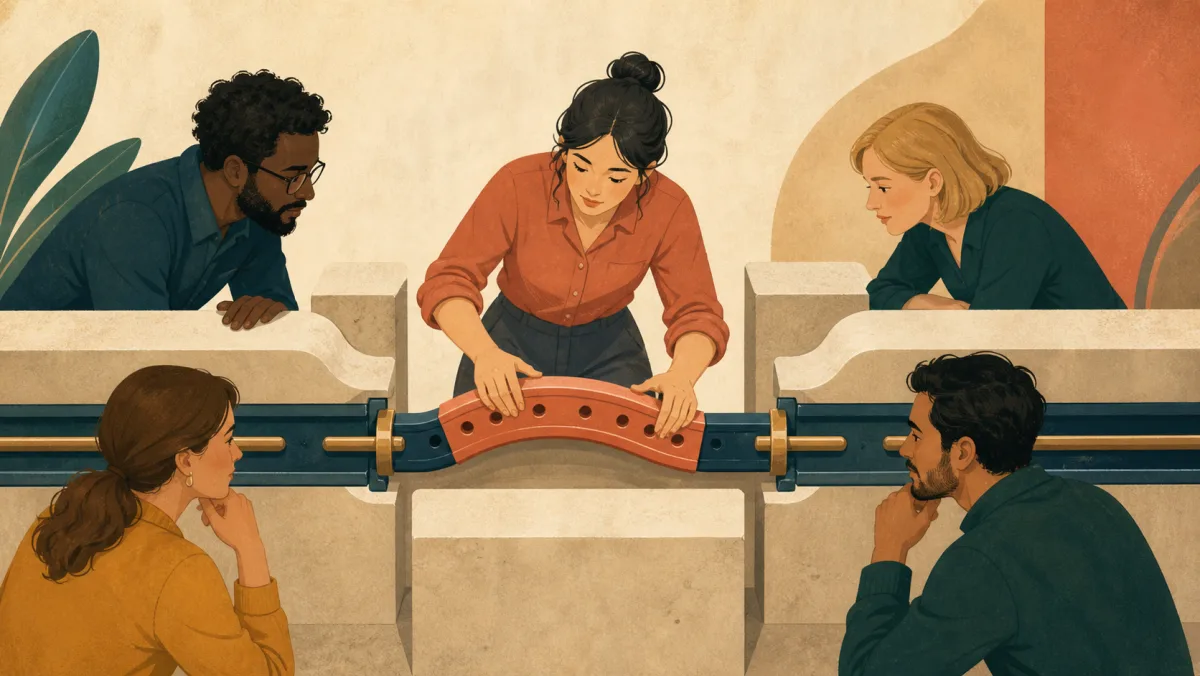
Wiggle room is a useful workplace phrase for limited flexibility. It is also easy to overstate.
It means that a constraint can still move a little. The constraint might be a deadline, budget, price, scope, or rule.
It does not mean general freedom or unlimited choice. It also does not mean someone has approved a change.
Quick check
How much can actually move?
You know "Wiggle Room" well.
Keep going with the full learning path — more workplace contexts, related expressions, and practice using it yourself with feedback.
Continue with "Wiggle Room" →There's more to "Wiggle Room" than it seems.
You've got part of it, but the full learning path goes deeper into its nuances, workplace contexts, and when it sounds natural — then gives you practice using it yourself.
Learn "Wiggle Room" in depth →Wiggle room is bounded, not open-ended
The idiom names the small amount of give near a boundary. It avoids suggesting that anything goes or nothing can change. A deadline with wiggle room is not completely open. Only a small amount of movement remains.
"We have a bit of wiggle room on the milestone date if the design assets arrive late."
"There's a little wiggle room on the launch date if the final integration test slips by a day, but the trade-show announcement itself is fixed."
"Having wiggle room on the rollout sequence doesn't mean the team can redesign the whole plan — it just means the order of two low-risk steps can still be swapped."
Each example names a specific constraint and a small amount of flexibility. None suggests that the whole plan can be renegotiated.
Try it yourself
Describe one bounded option
Why "is there wiggle room" sounds more calibrated
Compare a direct request with a wiggle-room question:
"Can we change the deadline?"
"Is there any wiggle room on the deadline?"
The second sentence sounds more careful. It asks whether flexibility exists without assuming the answer. Asking to change the deadline is a direct request. The other person must then grant or refuse that request.
Where the phrase comes from
The image comes from the verb wiggle, meaning a small movement. It also suggests having physical space to move. These ideas explain the phrase's sense of limited give. For example, "the chair has no wiggle room because it is pressed against the wall". That sentence describes physical space rather than the workplace idiom. At work, the phrase still suggests a firm limit.
Practice scenarios
Practice using wiggle room in situations like:
- checking whether a milestone date can move before assuming it's fixed
- explaining that a plan has some flexibility, but not a full redesign
- distinguishing the literal, physical sense of the phrase from the workplace idiom
Useful practice phrases:
- "We have a bit of wiggle room on..."
- "There's a little wiggle room on... if..."
- "Having wiggle room on X doesn't mean we can redesign the whole plan."
Want to actually use "Wiggle Room" naturally at work?
Understanding it is one thing. Practice its nuances, see how it works in real workplace situations, and use it yourself with feedback.
Start the "Wiggle Room" learning path →Wiggle room is not a promise that anything can move. It means one small change may be possible, so ask for confirmation.