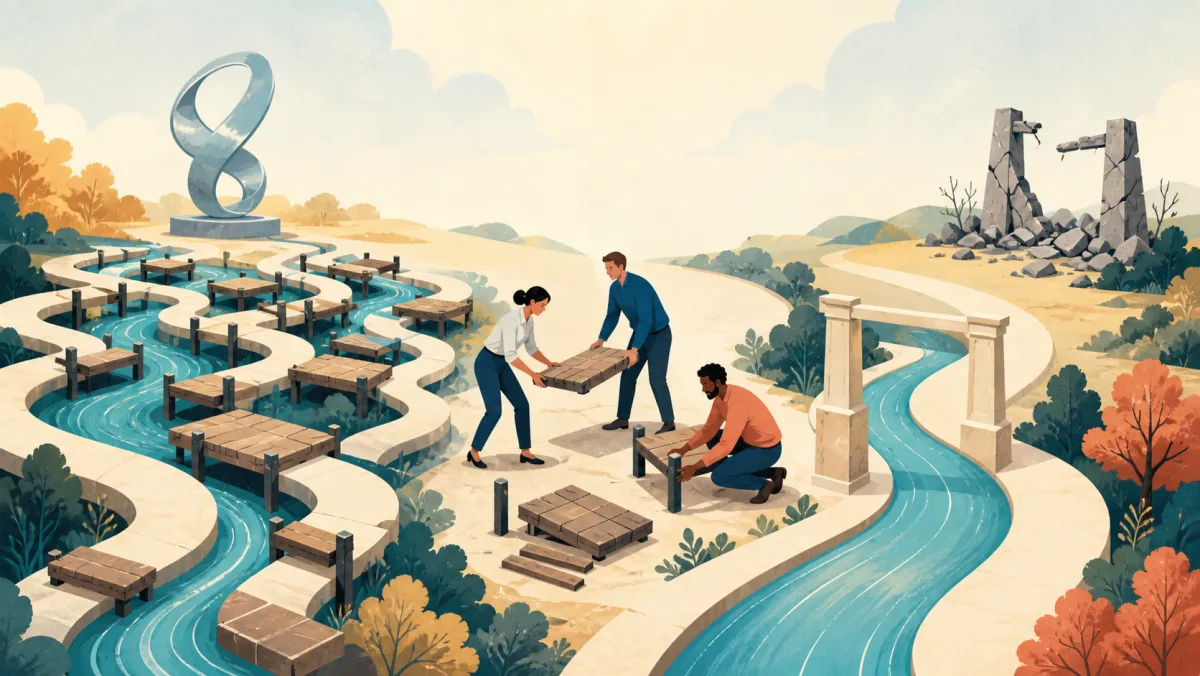
Streamline names one clear type of change at work; it does not mean any change for the better.
It means making a process simpler by removing waste, delays, or unnecessary steps.
It often fits discussions about operations, handoffs, reports, reviews, onboarding, and team updates.
Quick check
How well do you know "Streamline"?
You know "Streamline" well.
Keep going with the full learning path — more workplace contexts, related expressions, and practice using it yourself with feedback.
Continue with "Streamline" →There's more to "Streamline" than it seems.
You've got part of it, but the full learning path goes deeper into its nuances, workplace contexts, and when it sounds natural — then gives you practice using it yourself.
Learn "Streamline" in depth →Streamline means reduce friction
Compare:
"We need to make the review process better."
With:
"We need to streamline the review process."
The second line is more specific because it points to extra steps, delays, or work that adds little value.
That is the value of streamline: it identifies the kind of change you have in mind.
What you can streamline
Common objects include:
- streamline a process
- streamline a workflow
- streamline approvals
- streamline reporting
- streamline onboarding
- streamline the handoff
- streamline internal communication
- streamline documentation
Examples:
"We need to streamline the handoff from sales to the delivery team."
"The new dashboard may streamline our weekly reports."
"Can we streamline the review steps before the next launch?"
"Our setup process has too many steps. We should streamline it before we grow."
In each example, the problem lies in how the work gets done.
Try it yourself
Use "Streamline" yourself
Streamline vs improve
Improve is a broad word.
Streamline is more exact.
You can improve work by making it clearer, faster, more accurate, or easier to use.
You streamline a process by making it simpler and cutting waste.
Natural:
"We need to improve the facts and logic in the report."
Less natural:
"We need to streamline the report's quality."
Natural:
"We need to streamline how we create the report."
This is why streamline belongs in a wider set of better verbs for professional English. It tells people what sort of change you seek.
The word is common in international business, but it can feel like vague office language. With a broad audience, say which steps you plan to remove and why.
Streamline in workload conversations
Streamline can help in talks about a heavy load. It points to a process that the team can review.
"To reduce the team's load, we could streamline how new work comes in."
The line identifies the strain and one possible response, but it does not claim that fewer steps will solve every capacity issue.
That is why streamline often appears in workload and capacity conversations. It links a limit to a possible process change.
Common mistakes
Mistake 1: Using streamline for any improvement.
Less natural:
"We need to streamline the client story."
Better:
"We need to make the client story more convincing."
Use streamline for process waste, not for the strength of a message.
Mistake 2: Using streamline for a tiny edit.
Less natural:
"I streamlined one typo."
Better:
"I fixed that typo."
The word tends to fit a process or system, not one small fix.
Mistake 3: Not naming what friction is being removed.
Vague:
"We should streamline this work."
Better:
"We can streamline reviews by removing the check that two teams repeat."
The sentence is clearer when you identify the extra work. Before cutting a step, confirm the owner has authority, use evidence, consult affected people, and keep any check that protects consent, safety, quality, or approval. Credit the team that found the waste, then measure the result.
Where streamline fits
| Situation | Natural use |
|---|---|
| Approvals | "Can we streamline reviews before the next launch?" |
| Reporting | "This template may streamline our monthly reports." |
| Handoffs | "We should streamline the handoff between these teams." |
| Workflows | "This work path has extra steps. We can streamline it." |
| Onboarding | "We should streamline setup before the team grows." |
Practice scenarios
Practice using streamline in cases such as:
- a review process repeats the same check
- reports take too much work by hand
- a team handoff causes delays
- setup has steps that add no clear value
- a work path slows the agreed result
Useful phrases include:
- "We could streamline..."
- "This may streamline the process by..."
- "We want to streamline the handoff from..."
- "Could we streamline the reviews before..."
- "This process needs to be streamlined because..."
Lyra Practice lets adults test this word in work scenes and get feedback on whether it fits.
Streamline is not a stronger form of improve.
It names a simpler process with less waste or delay.
Want to actually use "Streamline" naturally at work?
Understanding it is one thing. Practice its nuances, see how it works in real workplace situations, and use it yourself with feedback.
Start the "Streamline" learning path →