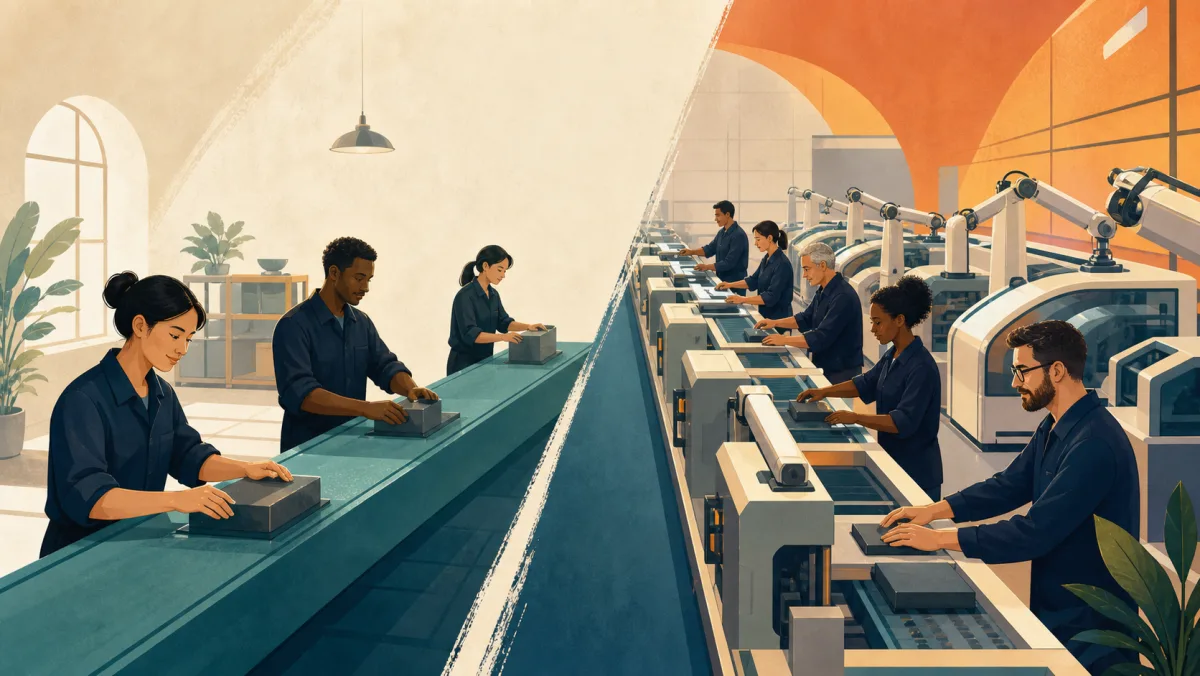
New software does not always make a process simpler.
This is why "modernized" and "streamlined" make different claims. Still, one project can support both claims.
Use modernize when you update something for current needs or methods. This may involve tools, policies, designs, or work practices. Use streamline when you make a process simpler or more efficient. That may mean fewer steps, but it can also mean clearer roles.
Quick check
How well do you know "Streamline"?
You know "Streamline" well.
Keep going with the full learning path — more workplace contexts, related expressions, and practice using it yourself with feedback.
Continue with "Streamline" →There's more to "Streamline" than it seems.
You've got part of it, but the full learning path goes deeper into its nuances, workplace contexts, and when it sounds natural — then gives you practice using it yourself.
Learn "Streamline" in depth →A modern system can still be redundant
A modern system can still contain repeated work. Replacing old software does not remove an approval that no longer serves a clear need.
"We modernized the intake system by replacing the old ticketing tool with a current platform." (new tool, process unchanged)
The platform is current, but the process is unchanged. Tickets still pass through the same approvals before work starts.
An old tool can still run a lean process
A team can also streamline work without new tools. It might combine two paper reviews or clarify who approves requests.
"We streamlined intake by removing a duplicate form -- still using the same legacy tool." (less friction, no new technology)
The technology did not change, but the team removed one repeated form, so the process now needs less work.
Try it yourself
Use "Streamline" yourself
When modernizing creates the opportunity to streamline
"Modernizing the platform also gave us the chance to streamline intake, cutting one redundant step in the process." (both, related but distinct claims)
A modernization project may reveal slow or repeated work. The team can then streamline that work during the same project. Report each result with its own evidence. A current platform supports the first claim. Fewer handoffs or lower handling time may support the second.
The mistake to avoid
Do not assume that newer technology improves efficiency. Ask what became current and what became easier or faster. Compare measures such as handling time, error rates, and handoffs. These results can move in different directions.
Practice scenarios
Practice choosing between streamline and modernize in situations like:
- describing a platform move that kept the same approval steps
- reporting a process fix made within an unchanged older tool
- explaining an update that also removed a repeated step
Useful practice phrases:
- "We modernized [system], but the process still has [N] steps."
- "We streamlined [process] by [specific fix], using the same older tool."
- "The update also streamlined [process], reducing [measure] from [A] to [B]."
Want to actually use "Streamline" naturally at work?
Understanding it is one thing. Practice its nuances, see how it works in real workplace situations, and use it yourself with feedback.
Start the "Streamline" learning path →Modernizing brings something closer to current needs or methods. Streamlining makes a process simpler or more efficient.
They can happen together, but the words describe different results.