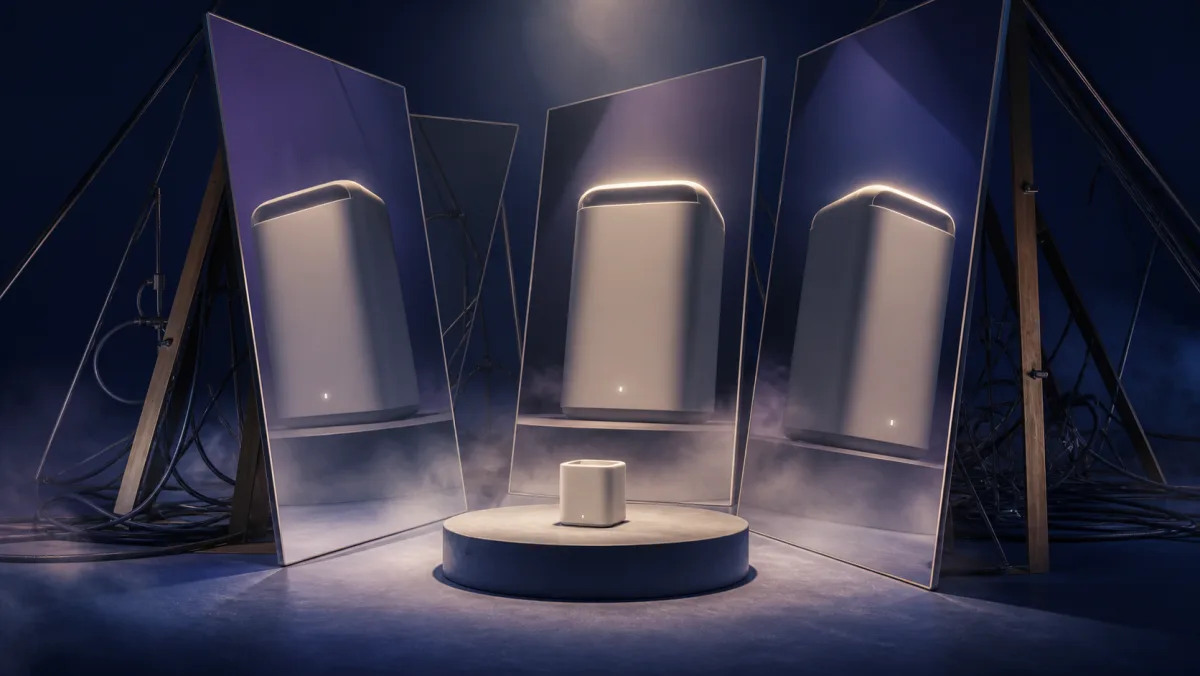
Smoke and mirrors describes an impressive or confusing presentation that obscures weak substance or an inconvenient reality.
The examples below show the expression in realistic workplace contexts. They also show the grammar around it, not only the definition.
Ready to go beyond the quiz on "Smoke And Mirrors"?
Take the full learning path: hear it in real workplace contexts, watch short explanations, learn its nuances and when to use it, then practice using it yourself.
Start learning for free →Now see if you can use it naturally yourself.
Try it yourself
You know how to use "Smoke And Mirrors," too.
Keep going with the full learning path — more workplace contexts, related expressions, and continued practice.
Continue with "Smoke And Mirrors" →There's more to "Smoke And Mirrors" than it seems.
You've got part of it, but the full learning path goes deeper into its nuances, workplace contexts, and when it sounds natural — then gives you practice using it yourself.
Learn "Smoke And Mirrors" in depth →Natural examples
Example 1
“Without measured results, the polished savings story may be smoke and mirrors.”
Example 2
“The buyer saw through the smoke and mirrors and asked for the cost assumptions.”
Example 3
“Behind the smoke and mirrors, the product still lacked a production benchmark.”
Example 4
“The claimed savings were largely smoke and mirrors.”
Example 5
““The demo may be smoke and mirrors: it shows projected savings but no measured results.”.”
Example 6
“The savings claim may be smoke and mirrors: the slide highlights gross savings while omitting implementation costs.”
Example 7
“Without the cost assumptions, the proposal's polished savings story may be smoke and mirrors.”
Want to actually use "Smoke And Mirrors" naturally at work?
Understanding it is one thing. Practice its nuances, see how it works in real workplace situations, and use it yourself with feedback.
Start the "Smoke And Mirrors" learning path →More ways to build the sentence
These are the main patterns to practice:
be smoke and mirrorsall / mostly / just smoke and mirrorsdismiss something as smoke and mirrorsdescribe something as smoke and mirrorssee through the smoke and mirrorsbehind the smoke and mirrors
Use the pattern that matches your message. Do not force the expression into every sentence. A direct description is often better when the stakes are high or the audience may not know the phrase.
What the sentence needs to make clear
A strong sentence gives enough context for the listener to understand why the expression fits. Name the plan, behavior, decision, or result you mean. If the phrase contains criticism, connect it to observable facts rather than using it as a label.
Compare these nearby choices:
| Choice | What it adds |
|---|---|
| spin | selective framing that presents facts in a favorable way. |
| window dressing | superficial cosmetic improvement without deeper change. |
| hand-waving | a vague or unsupported explanation that skips the mechanism. |
| misdirection | shifting attention away from the issue being examined. |
These terms may describe the same situation from different angles. Choose the one that matches the point you need to make.
Tone and audience
Smoke and mirrors is informal and accusatory because it suggests misleading appearance or concealment. Formal communication often states the missing evidence or obscured fact directly.
Before using the expression, ask three questions:
- Does the sentence match the expression's real meaning?
- Is the tone suitable for this person and setting?
- Would a plain description be clearer or fairer?
Practice it aloud
Start with one of the common patterns. Add a real but non-confidential workplace situation. Then say the sentence once in a direct version and once in a softer version. This helps you control both meaning and tone.
The goal is not to memorize one example. It is to build a sentence that makes the meaning, evidence, and tone clear.
Lyra Practice helps advanced non-native English professionals learn the nuance of high-value workplace expressions and practice using them in realistic scenarios, so their English sounds natural, precise, and senior at work. Try Lyra Practice.