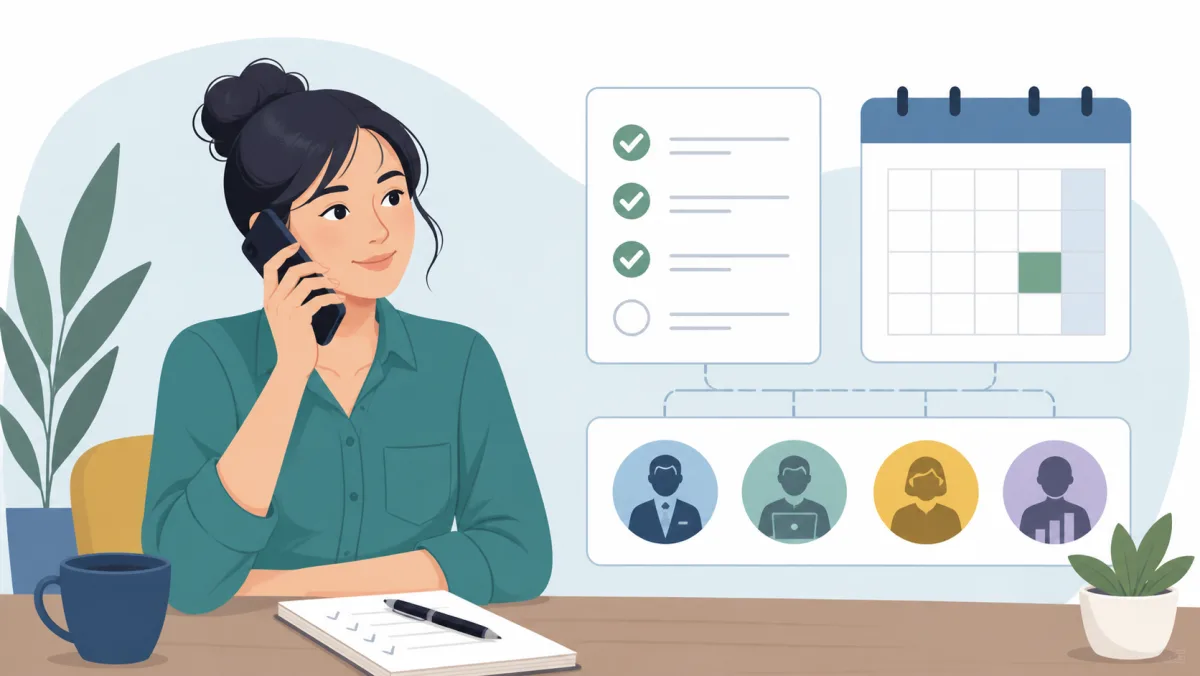
A screening call is an early talk in the hiring process. It may also be called a phone screen or recruiter screen. Both sides use it to check fit and decide whether to move on.
“We’d like to schedule a 30-minute screening call with our recruiter.”
This is still an interview, even when it feels friendly or brief. It is not usually a job offer or a full review.
What may happen on the call
A recruiter or HR representative may ask about:
- your current work and relevant experience
- why you are interested
- location or work-arrangement requirements
- availability and hiring timeline
- compensation expectations or the role’s range
- work authorization in an appropriate form
- basic qualifications from the posting
- communication or language requirements relevant to the job
They may also explain the organization, role, and next steps.
The exact process varies by company and role. At a small firm, a founder may lead the first call. Some screens include in-depth questions about the work. Government, union, academic, or regulated roles may use more formal steps.
Screening versus hiring-manager interview
A screen often checks basic fit. A hiring-manager interview may explore your past work and the team's needs.
“The recruiter screen went well, so the next step is a hiring-manager interview.”
Moving on means you are still being considered. It does not always mean you are a finalist. Some firms also use tests or panel interviews.
A lot to take in? It is.
But Rome wasn't built in a day. Build your American workplace English one expression and cultural reference at a time—with curated explanations and structured practice in Lyra Practice.
Start a session →What you might hear
“Walk me through your résumé.”
Give a short story tied to the role. You do not need to list every job and task.
“What salary range are you targeting?”
You can ask for the planned pay range. You can also ask whether it means base pay or total pay.
“Are you authorized to work in the United States?”
Answer the job-related question asked. Do not assume that you must provide documents during the call. The later verification process has its own rules.
“Do you need accommodation for the interview process?”
Use the stated channel if you need a change to the interview. Share only the details needed for that request.
How to prepare
- reread the posting and your submitted résumé
- prepare a 60–90 second professional summary
- choose two relevant achievement examples
- know your availability and location constraints
- prepare questions about process and role basics
- confirm the time zone, platform, and caller
- use notes, but do not read a script mechanically
A non-native speaker can ask for repetition:
“Could you repeat the last part of the question?”
or clarify:
“When you say availability, do you mean interview dates or a possible start date?”
It is better to clarify than to pretend you understood.
Questions you can ask
- “What are the next stages and expected timeline?”
- “Who does this role report to?”
- “What are the most important qualifications at this stage?”
- “What is the approved compensation range?”
- “Is the position remote, hybrid, or site-based?”
- “Where should I send follow-up materials?”
The recruiter may not know all the details about the team. If so, save those questions for the hiring manager.
Follow-up example
“Thank you for explaining the role and process today. My experience leading the billing migration appears closely aligned with the integration work you described. I remain interested and am available for the next round Tuesday or Thursday.”
A thank-you message is common, but not required everywhere.
Privacy, fraud, and legal sensitivity
Check unexpected recruiter messages through the company’s official site. You can also use an official contact channel. A normal first screen should not require payment or gift cards. Be cautious about requests for banking details or identity documents.
Federal rules limit disability-related health questions before a conditional offer. Hiring questions should focus on job needs and follow a consistent process. Firms generally complete Form I-9 after a person accepts an offer. New hires choose which documents to present from the acceptable lists. Employers may not demand specific documents based on citizenship, immigration status, or national origin.
This article gives general information, not legal advice. Rules vary by employer, role, sector, and location.
Recognition versus production
When you hear screening call, prepare for a real early review. Ask who will call, what the format is, and what follows.
Compare recruiter versus hiring manager and how to answer why you should be hired.
The practical takeaway
A screening call often checks basic alignment before deeper interviews. Treat it professionally and keep answers focused. Clarify unclear questions and protect sensitive information. Before leaving, ask what the next stage may be.