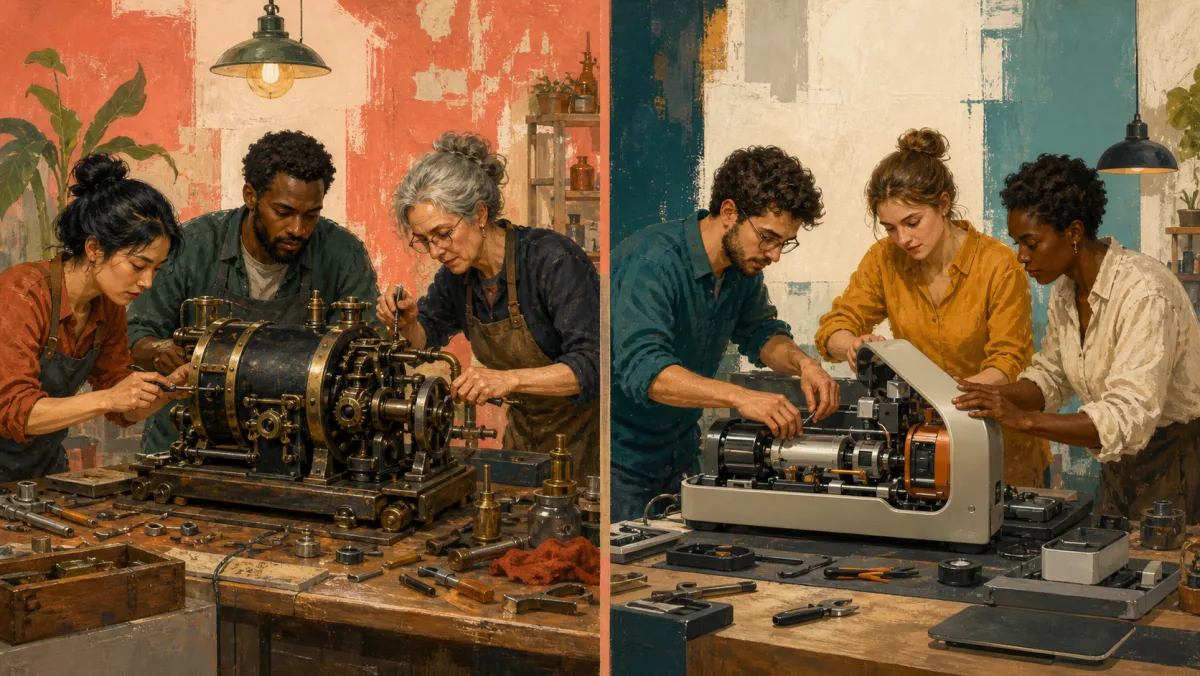
Revamp means changing or improving something in a substantial way. Modernize makes it more current in style, methods, or technology, so the words can overlap.
Quick check
Current goal or defined change?
You know "Revamp" well.
Keep going with the full learning path — more workplace contexts, related expressions, and practice using it yourself with feedback.
Continue with "Revamp" →There's more to "Revamp" than it seems.
You've got part of it, but the full learning path goes deeper into its nuances, workplace contexts, and when it sounds natural — then gives you practice using it yourself.
Learn "Revamp" in depth →Naming a motivation, not a solution
Modernize can name the goal before a team chooses the work. An outdated space or system may need visual, technical, or structural changes.
"The break room feels outdated, but we haven't decided yet whether the fix is new furniture and paint, or actually reconfiguring the layout and plumbing for a kitchenette."
"The break room needs to be modernized" names the desired result. It does not yet say which parts will change.
Revamp still needs a clear scope
"The break room needs a revamp" suggests substantial improvement, but it does not tell us which parts will change.
The sentence is natural but gives little detail about the intended goal. Since a revamp can include cosmetic or structural work, state the scope when it matters.
Try it yourself
Describe one part of the modernization
The words can work together
"We're modernizing the break room with a revamp of the seating and paint, plus an overhaul of the outlet wiring."
Here, modernizing names the overall goal. Revamp and overhaul name parts of the plan. This split is useful, but it is not a fixed rule. In other contexts, revamp can cover the whole project.
Not a vaguer synonym for "update"
Update is broad and can mean any move to a newer state. Modernize says the change makes something more current. Revamp stresses a broad improvement or strong change, so add details when the exact work matters.
Practice scenarios
Practice using revamp and modernize in situations like:
- naming a more current result before the exact work is decided
- describing a substantial improvement without claiming it is only cosmetic
- using modernize for the goal and revamp for part of the plan
Useful practice phrases:
- "[X] needs to be modernized — we haven't decided yet whether that's cosmetic, structural, or both."
- "A revamp could cover several kinds of work, so let's state the scope."
- "We're modernizing [X] through a revamp of [specific part]."
Want to actually use "Revamp" naturally at work?
Understanding it is one thing. Practice its nuances, see how it works in real workplace situations, and use it yourself with feedback.
Start the "Revamp" learning path →Modernize points to a more current result. Revamp points to substantial change or improvement.
The terms may overlap, so state the work when precision matters.