In much of the United States, restroom and bathroom are common polite names for a room with a toilet. Toilet most often means the fixture itself. Most US listeners will understand “Where is the toilet?”, but in many public places a speaker may be more likely to ask, “Where is the restroom?”
“Excuse me, where’s the restroom?”
This is a clear and polite question in many public and work settings.
When Americans say “restroom”
Restroom often means a toilet room in a public or shared place. The room does not need to be a place for rest:
“The restrooms are beside the elevators.”
“Is there a restroom on this floor?”
“The restroom is temporarily closed for cleaning.”
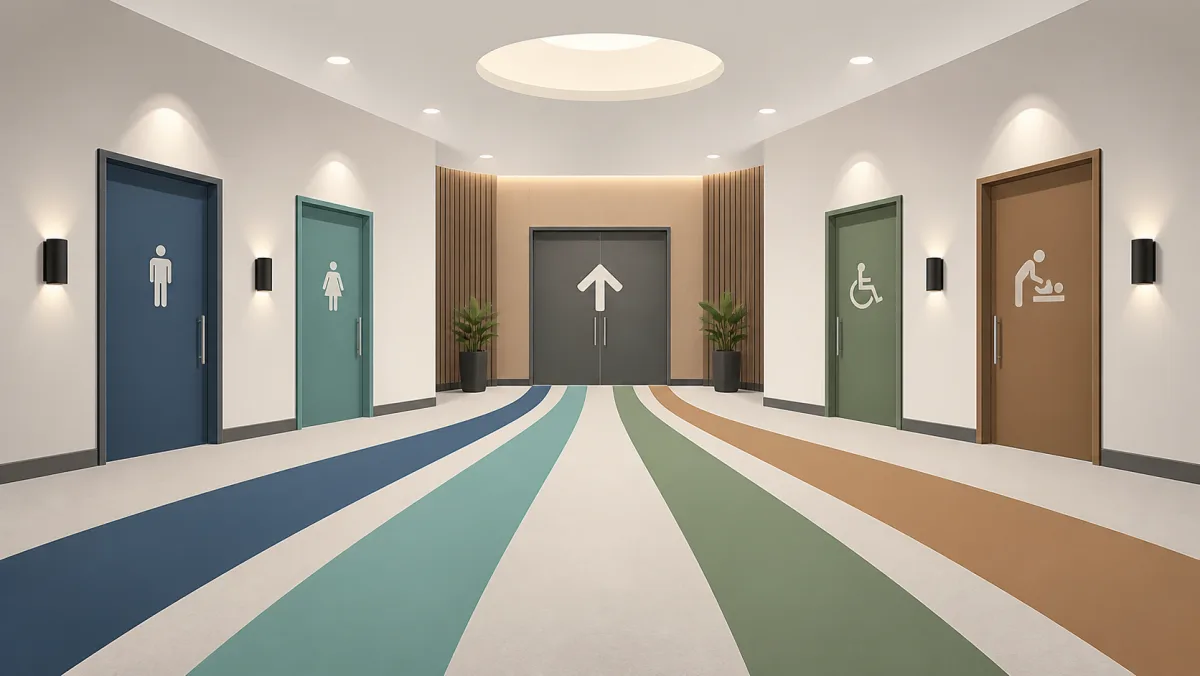
Signs may say men, women, all-gender restroom, or family restroom, and they may also use symbols. Use the labels on the site. If someone asks for an accessible restroom, give facts about its location and features instead of guessing what the person needs.
When Americans say “bathroom”
Bathroom is common in US homes, where the room may have a bathtub or shower. In US speech, the word can also mean a toilet room with no bath:
“The bathroom is down the hall on the left.”
“I’ll be right back—I’m going to the bathroom.”
At work, bathroom is normal and not rude. Restroom may sound a little more neutral with a new contact or a customer, though the difference is often small and local habits differ.
A home listing may name a full bathroom, half bathroom, or powder room. A half bath or powder room often has a toilet and sink but no bath or shower, though exact definitions can vary by listing service and local practice.
A lot to take in? It is.
But Rome wasn't built in a day. Build your American workplace English one expression and cultural reference at a time—with curated explanations and structured practice in Lyra Practice.
Start a session →When Americans say “toilet”
In common US use, toilet most often means the fixture:
“The toilet isn’t working.”
“Please don’t flush paper towels down the toilet.”
In several other varieties of English, toilet is a standard name for the whole room. In the US, “Where is the toilet?” is clear and not obscene, though it may sound more direct or less local than “Where is the restroom?”
In building, accessibility, and cleaning documents, toilet room and toilet facilities are normal terms. The US Occupational Safety and Health Administration (OSHA), for example, uses toilet facilities in its sanitation rules. The setting changes how direct the word sounds.
What might you hear at work?
“I’m stepping away for a quick bathroom break.”
The person will be away for a short time. More detail is rarely needed.
“The nearest restroom is past the break room.”
This gives a visitor a direction. The break room is for staff breaks, while the restroom is the toilet room.
“There’s an all-gender restroom on the third floor.”
This simply identifies the room’s label. It does not make assumptions about the person who asked.
“Can we take a five-minute bio break?”
Bio break is an informal term for a short break to meet physical needs, often during a long meeting. The break can include a restroom visit or getting water. Some teams use this term, while others say short break.
What can you say naturally?
To a receptionist or server:
“Excuse me, could you tell me where the restroom is?”
To a colleague in an office:
“Where’s the nearest bathroom?”
During a meeting:
“Could we take a five-minute break?”
When giving directions:
“The restrooms are across from Conference Room B.”
You rarely need to share private details. “I’ll be right back” may be enough when no reason is needed.
Other terms you may encounter
Washroom is easy to understand in the US and is especially common in Canadian English. Some US speakers and places use it too, so it is not wrong.
Men’s room and women’s room are still common when rooms have gender labels. Lavatory appears in formal use and in aviation announcements. Flight crews may say lav. WC and loo are less common in daily US speech, though international travelers may recognize them.
Word choice can change with region, age, place, and personal preference. There is no single perfect label. Restroom works well in many US public settings, while bathroom is also natural in many of them.
For another place-related difference, see first floor versus ground floor in American English. For easy conversation with new coworkers, read how to make small talk at work.