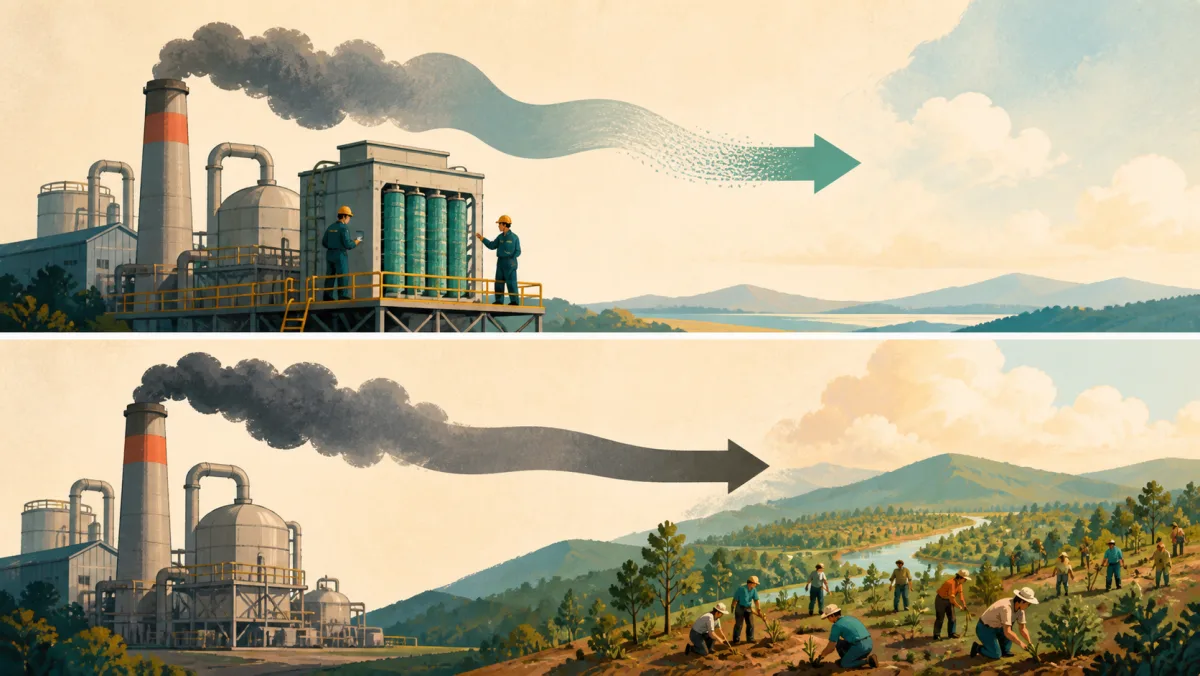
Mitigate and offset can appear in the same emissions report. They describe different actions and should not be swapped.
Mitigate means making harm, risk, or damage less severe. Offset means a new step helps balance the first harm. The first step cuts harm; the second helps make up for it.
Quick check
How well do you know "Mitigate"?
You know "Mitigate" well.
Keep going with the full learning path — more workplace contexts, related expressions, and practice using it yourself with feedback.
Continue with "Mitigate" →There's more to "Mitigate" than it seems.
You've got part of it, but the full learning path goes deeper into its nuances, workplace contexts, and when it sounds natural — then gives you practice using it yourself.
Learn "Mitigate" in depth →Why this distinction matters more than a synonym choice
This difference can prevent false claims in ESG and emissions reports. Carbon credits do not erase a firm's own past emissions. Each credit stands for a cut or removal from another project. By contrast, source mitigation cuts or avoids the firm's own emissions. Using both terms alike can hide what changed.
Mitigate: "The manufacturing plant mitigated its emissions by switching to a lower-carbon process."
Offset: "The company offset its remaining emissions by purchasing verified carbon credits."
The mix-up to avoid
Conflation to avoid: *"We mitigated our emissions through carbon offsets" — purchasing credits is offsetting, not mitigating, the emissions themselves.
Ask what happened to the harm from the stated work. Mitigation made that harm smaller or less severe. An offset balanced the harm with a measured gain from another project. This difference matters in climate and financial-risk reports. Readers need to know if gross emissions fell.
Try it yourself
Use "Mitigate" yourself
Both moves can appear in the same strategy
A clear climate report may use both words together. For example: "The plant mitigated 30% of its emissions by switching processes, and offset the remaining emissions through verified credits while it works toward mitigating the rest at the source." It shows gross cuts and the offset as two distinct parts. The vague phrase "we're addressing our emissions" hides that split.
Risk reports can follow the same pattern. A firm might change its sources to mitigate currency exposure. It might then offset the rest with a financial tool. Each step has a set role in the plan.
Practice scenarios
Practice choosing between mitigate and offset in situations like:
- writing an ESG report line about emissions actually reduced at the source
- describing a purchase of carbon credits without implying emissions themselves went down
- catching a draft that conflates mitigation and offsetting in a sustainability claim
Useful practice phrases:
- "The plant mitigated its emissions by switching to..."
- "The company offset its remaining emissions by purchasing..."
- "That's offsetting, not mitigating — the emissions themselves didn't change."
Want to actually use "Mitigate" naturally at work?
Understanding it is one thing. Practice its nuances, see how it works in real workplace situations, and use it yourself with feedback.
Start the "Mitigate" learning path →Mitigate makes the harm smaller or less severe.
Offset brings a balance through another step. Clear reports show which step took place.