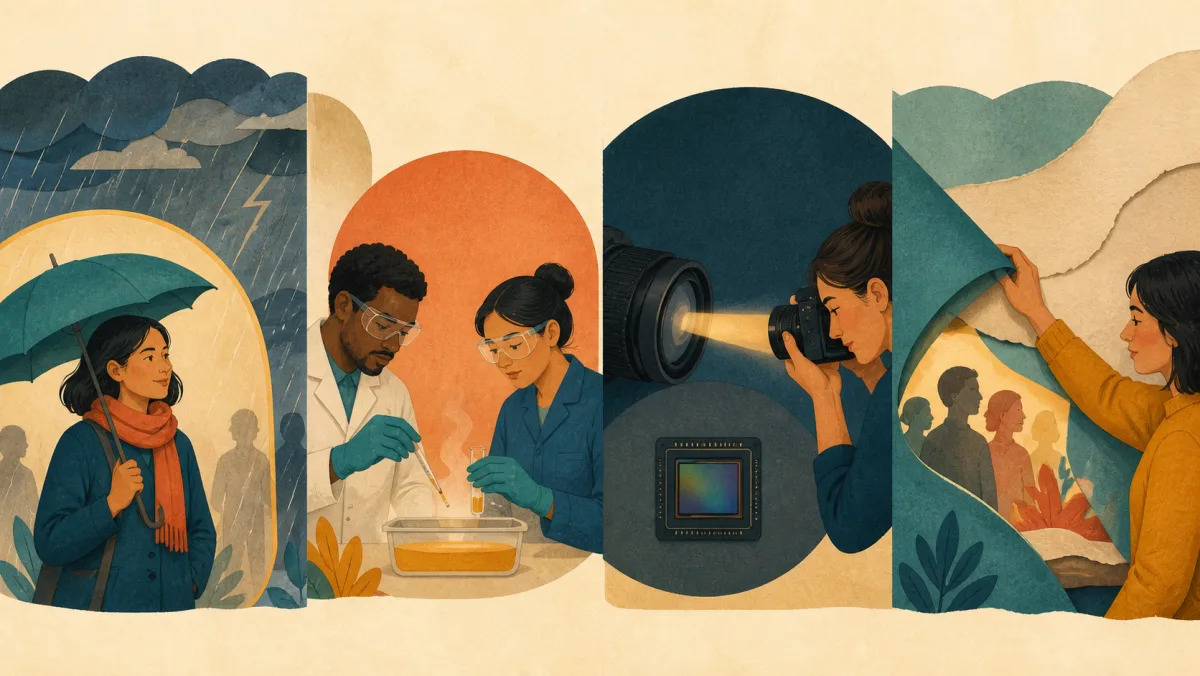
Exposure has several meanings beyond its common uses in risk, marketing, and career talk. You may still see these senses in news or technical work. Context keeps you from reading the wrong meaning into a sentence.
Quick check
How well do you know "Exposure"?
You know "Exposure" well.
Keep going with the full learning path — more workplace contexts, related expressions, and practice using it yourself with feedback.
Continue with "Exposure" →There's more to "Exposure" than it seems.
You've got part of it, but the full learning path goes deeper into its nuances, workplace contexts, and when it sounds natural — then gives you practice using it yourself.
Learn "Exposure" in depth →Three less common senses you may meet at work
"After hours stranded on the mountain in the storm, the hikers were treated for exposure."
Here, exposure means illness or injury caused by harsh weather, usually cold. In other health contexts, exposure to a virus or chemical means contact with it. Contact does not by itself prove illness or injury.
"The photographer used a long exposure to capture the trail of car headlights at night."
In photography, an exposure is the recording of light on film or a sensor. A long exposure uses a slow shutter speed. The noun is often countable here: "an exposure" or "two exposures."
"The investigation led to the exposure of the hidden accounting scheme."
Here, exposure means the act of making hidden conduct known. Disclosure is often more neutral. An exposé is a report that reveals wrongdoing or troubling facts. The two words are related but not interchangeable.
Try it yourself
Use "Exposure" yourself
Naming the boundary this guide does not cross
One more sense needs a clear boundary. "Indecent exposure" is a criminal-law label in some places. Its exact legal meaning depends on the jurisdiction. This guide does not cover that legal topic.
Look at the nearby subject and verb. A storm points to physical harm. A virus or chemical points to contact. A camera points to light. A report about hidden conduct points to disclosure. These clues are more useful than assuming every use means financial risk or public visibility.
Practice scenarios
Practice using exposure in situations like:
- telling harmful cold from contact with an illness or chemical
- recognizing the photography and disclosure senses in reports
- avoiding a financial-risk reading when the context points elsewhere
Useful practice phrases:
- "That's a different sense of exposure -- it's about [weather/photography/disclosure], not risk or visibility."
- "The hikers were treated for exposure after the storm."
- "The exposure of the scheme made front-page news."
Want to actually use "Exposure" naturally at work?
Understanding it is one thing. Practice its nuances, see how it works in real workplace situations, and use it yourself with feedback.
Start the "Exposure" learning path →Not every use of exposure refers to business risk or visibility. The surrounding topic tells you which sense is active.