
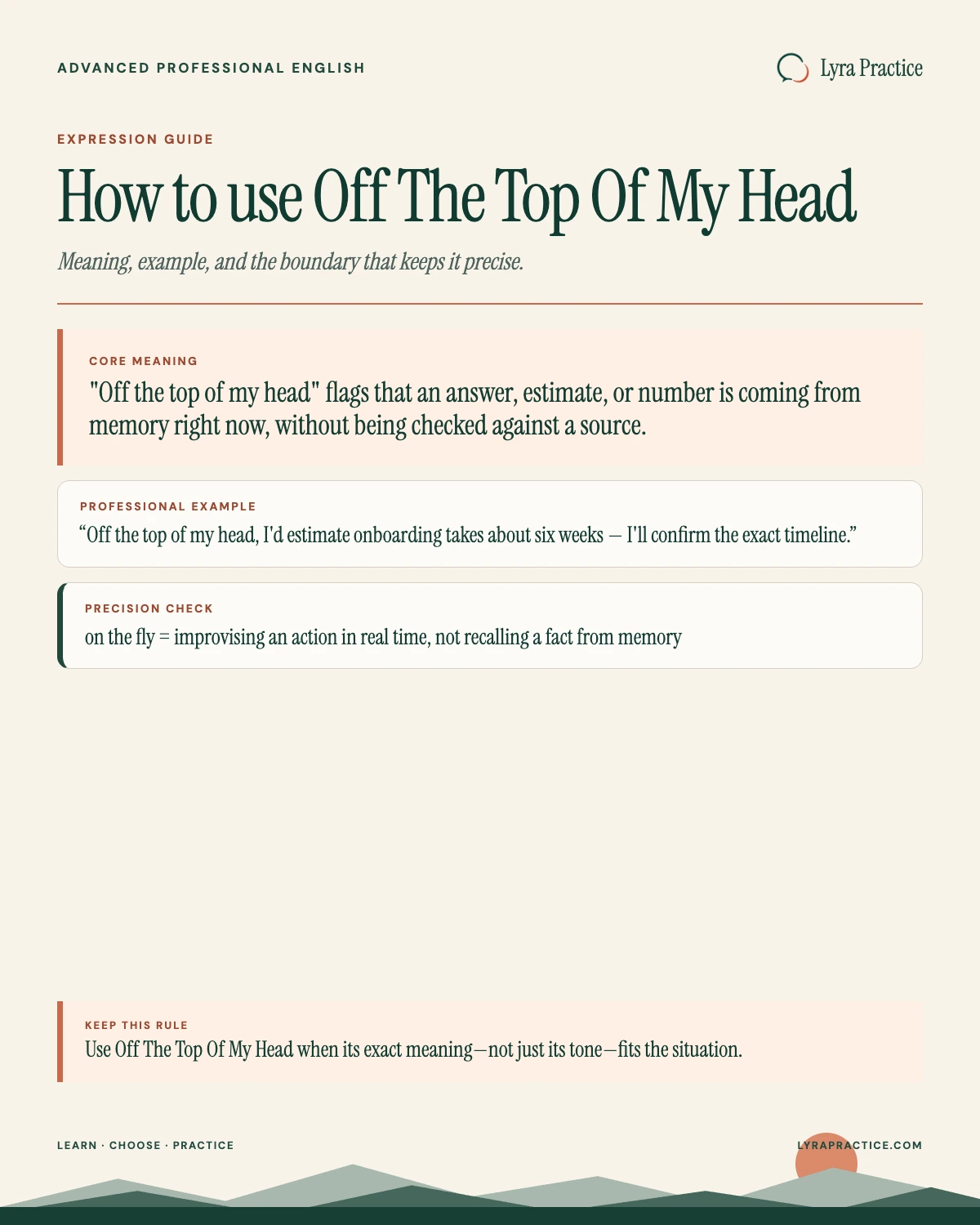
Giving a fast answer in a meeting may require an estimate. If the source is not in front of you, label the number as unverified.
An exact-sounding number may be mistaken for confirmed data. A vague warning can cause confusion too. State the limit once, then say how and when you will check it.
Quick check
How well do you know "Off The Top Of My Head"?
You know "Off The Top Of My Head" well.
Keep going with the full learning path — more workplace contexts, related expressions, and practice using it yourself with feedback.
Continue with "Off The Top Of My Head" →There's more to "Off The Top Of My Head" than it seems.
You've got part of it, but the full learning path goes deeper into its nuances, workplace contexts, and when it sounds natural — then gives you practice using it yourself.
Learn "Off The Top Of My Head" in depth →Give the hedge once, clearly
Use one clear flag for the answer that needs it. Do not repeat the same hedge on every claim.
"Off the top of my head, I'd say around 340 units last quarter — let me confirm the exact figure after this call."
This gives the group a useful estimate and a clear limit. It also warns people not to rely on the figure yet. The promised check makes that limit testable.
Match the hedge to the stakes
Match the response to the possible impact. A client proposal, budget, or headcount request needs documented support. An informal estimate may need less follow-up if no decision depends on it.
Low stakes: "Off the top of my head, that's roughly a two-week turnaround." Confirm it if someone plans to rely on it.
High stakes: "Off the top of my head, I'd estimate $40K. Please don't use it in the client proposal yet. I'll confirm it with finance by end of day."
Try it yourself
Flag and follow up
Don't over-hedge
Too many hedges can make the status of each number unclear. If you lack a sound basis for an estimate, say so. Do not invent a figure to keep the meeting moving.
"I don't have a number for that off the top of my head — let me pull it and follow up."
The rule
Flag the unverified answer once. State its basis, limits, and follow-up when those facts matter. Before a decision, verify any important number against its source. Get approval for its use when needed.
Practice scenarios
Practice flagging unverified numbers in situations like:
- answering a question in a meeting without a source in front of you
- deciding whether a number needs a written follow-up before it's used
- avoiding over-hedging on a string of quick questions
Useful practice phrases:
- "Off the top of my head, I'd say around 340 units — let me confirm after this call."
- "I don't want that number in the proposal until I've confirmed it with finance."
- "I don't have a number for that off the top of my head — let me pull it."
Want to actually use "Off The Top Of My Head" naturally at work?
Understanding it is one thing. Practice its nuances, see how it works in real workplace situations, and use it yourself with feedback.
Start the "Off The Top Of My Head" learning path →A useful estimate can still be honest. Label it, check the evidence, and confirm it before anyone relies on it.