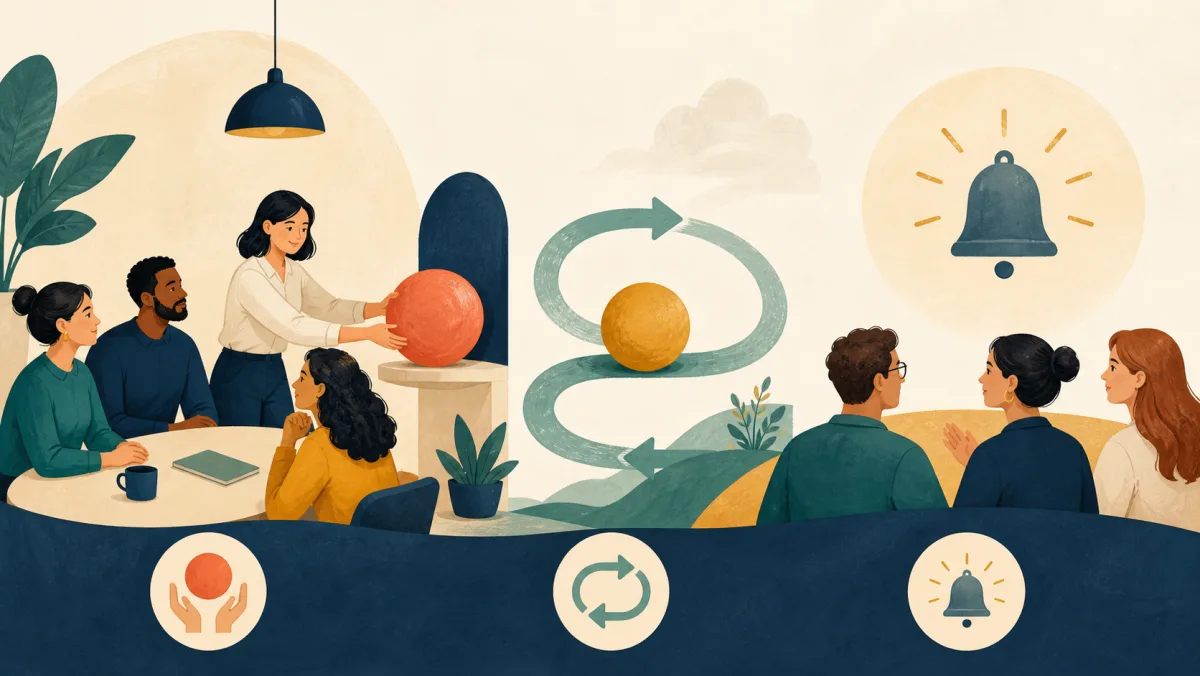
Circle back has two nearby ideas worth learning: "table this"/"park this" and "remind."
In US English, "table this" postpones an agenda item; in British English, it usually means present the item for discussion. "Park this" informally defers a topic. "Circle back" signals an intention to revisit it. A "reminder" only prompts memory or action.
US agenda deferral. "Let's table this until the next steering committee meeting -- it needs a decision we can't make here."
Lighter and still in play. "Let's circle back on this once we've had a chance to think it over."
Simple memory prompt, with no restart promised. "Can you remind me about this next week?"
Quick check
Defer, return, or prompt memory?
You know "Circle Back" well.
Keep going with the full learning path — more workplace contexts, related expressions, and practice using it yourself with feedback.
Continue with "Circle Back" →There's more to "Circle Back" than it seems.
You've got part of it, but the full learning path goes deeper into its nuances, workplace contexts, and when it sounds natural — then gives you practice using it yourself.
Learn "Circle Back" in depth →Why these three sit together
These ideas are close, so we cover them together. In US usage, "table this" removes an item from the current agenda, while "park this" is a less formal deferral. "Circle back" signals a return. A reminder only prompts memory.
Table this / park this: heavier and more formal
In US English, use "table" for a procedural deferral; in British English, it often means formally introduce a topic. "Park" is usually an informal way to defer it. These choices can sound less committed to a return than circle back.
Circle back: lighter, still open
Circle back does not carry the weight of a procedural agenda action. It keeps the item loosely open. Use it to say "we'll come back to this" without announcing a formal deferral.
Try it yourself
Make a deferred return credible
Remind: memory only, no promise to resume
Do not treat a reminder like the other two. It only brings something back to mind and does not promise a new discussion. "Can you remind me about this?" asks only for a memory prompt, with no promise to restart the conversation.
Why these three are worth learning
Mixing up these ideas can cause real confusion. Suppose you mean "let's circle back on this." Saying "I'll remind you about this" makes a weaker commitment. It passes follow-up to the other person's memory instead of promising to bring back the topic yourself.
Reading the room with table this / park this
Hearing "let's table this" in the US or "let's park this" often signals agenda management. Someone is likely making a deliberate choice, not just letting the conversation end. Check the regional meaning of table before using it yourself.
Practice scenarios
Practice using circle back in these situations.
- choosing between a procedural agenda deferral and a lighter promise to revisit a topic
- recognizing that a reminder doesn't promise a resumed discussion
- matching the weight of table this, park this, circle back, or remind to the situation
Useful practice phrases to try.
- "Let's table this until the next meeting."
- "Let's circle back on this once we've thought it over."
- "Can you remind me about this next week?"
Want to actually use "Circle Back" naturally at work?
Understanding it is one thing. Practice its nuances, see how it works in real workplace situations, and use it yourself with feedback.
Start the "Circle Back" learning path →In US English, table this is procedural. Park this defers. Circle back signals a return. A reminder is about memory.
Match the phrase's weight to how settled or open the item is.