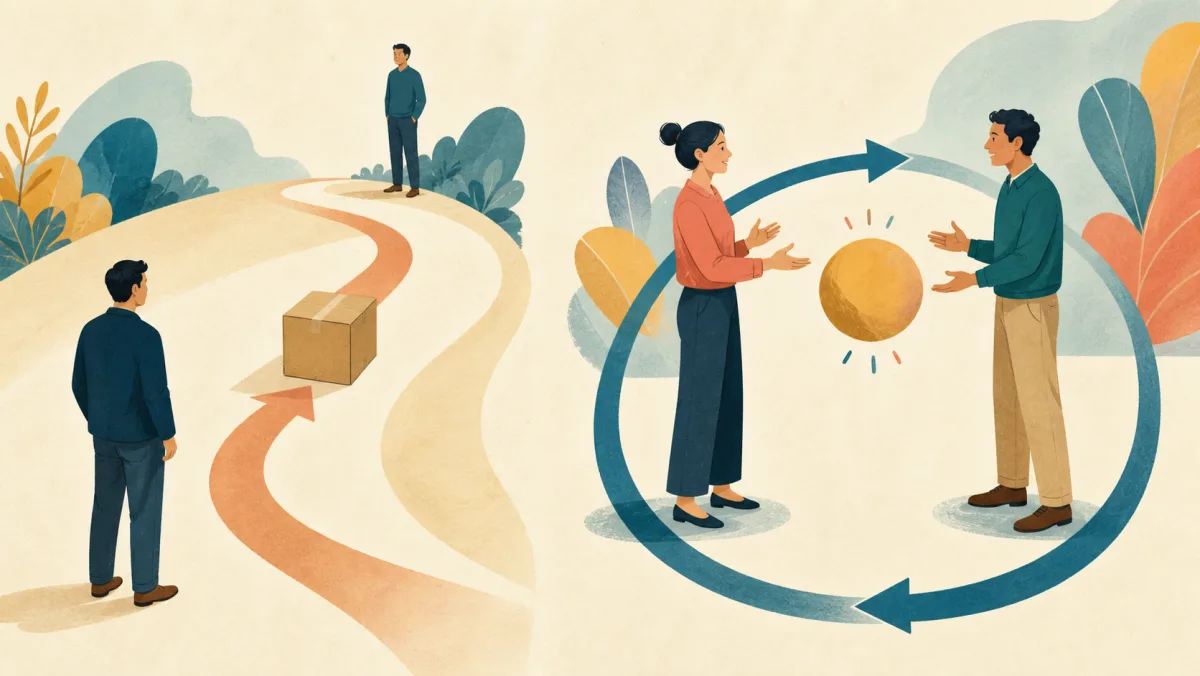
Follow up and circle back both describe a later return, but the key difference is the kind of return, not whether people spoke live.
"Follow up" means taking a later action after a message, task, or talk. "Circle back" means returning to a topic or person after time has passed; it often follows a discussion, but a live exchange is not required.
"I'll follow up on the application I submitted last week -- there was never a conversation to begin with."
"I'll circle back on what we discussed in yesterday's call once I've checked with Legal."
Quick check
Return to prior topic or take next action?
You know "Circle Back" well.
Keep going with the full learning path — more workplace contexts, related expressions, and practice using it yourself with feedback.
Continue with "Circle Back" →There's more to "Circle Back" than it seems.
You've got part of it, but the full learning path goes deeper into its nuances, workplace contexts, and when it sounds natural — then gives you practice using it yourself.
Learn "Circle Back" in depth →The test: did a live discussion happen?
Ask what you want to stress. Use "follow up" for the next action, check, reply, or request; use "circle back" when you mean return to a topic or person later. Either phrase can follow written contact.
Why the mix-up happens
The phrases overlap because both can mark later contact, yet "follow up" often points to a next step. You can follow up on an application, email, task, or discussion. "Circle back" highlights a return after a pause; it often sounds more informal and may feel vague without a date or action.
What each choice tells the listener
Using "circle back" does not claim that a live talk happened, though it may sound odd in a formal first reminder. Using "follow up" after a discussion is normal and does not reduce that discussion. Choose based on the next action and tone.
Try it yourself
Return to a deferred decision
A quick way to check yourself
Before choosing, ask what comes next: are you checking progress, asking for a reply, or doing a task? Follow up usually fits. If you are returning to a topic after a pause, circle back may fit; then add a date or action when clarity matters.
Why this matters more than it looks
The choice shapes tone and focus more than shared history. "I'll follow up on my application" clearly means asking about its status. "I'll circle back on my application" is possible, but less direct. It frames the message as a return, not a clear request. In formal email, name the action you need.
Follow up's wider range
Follow up is not only for first contact. It can come after a talk, email, task, or event. Circle back can also refer to written or spoken matters. The overlap is real. Follow up often makes the next-step link clearer. Circle back puts more weight on returning after a pause.
Practice scenarios
Practice using circle back in situations like:
- choosing "follow up" for a clear next action after an email or discussion
- returning to a topic after a pause with "circle back"
- adding a date or action so either phrase makes a real commitment
Useful practice phrases:
- "I'll follow up on the application I sent last week."
- "I'll circle back on what we discussed in yesterday's call."
- "Let's circle back on that once I've checked with Legal."
Want to actually use "Circle Back" naturally at work?
Understanding it is one thing. Practice its nuances, see how it works in real workplace situations, and use it yourself with feedback.
Start the "Circle Back" learning path →Follow up stresses a later action. Circle back stresses a return.
Choose the focus you need, then state the action or timing clearly.