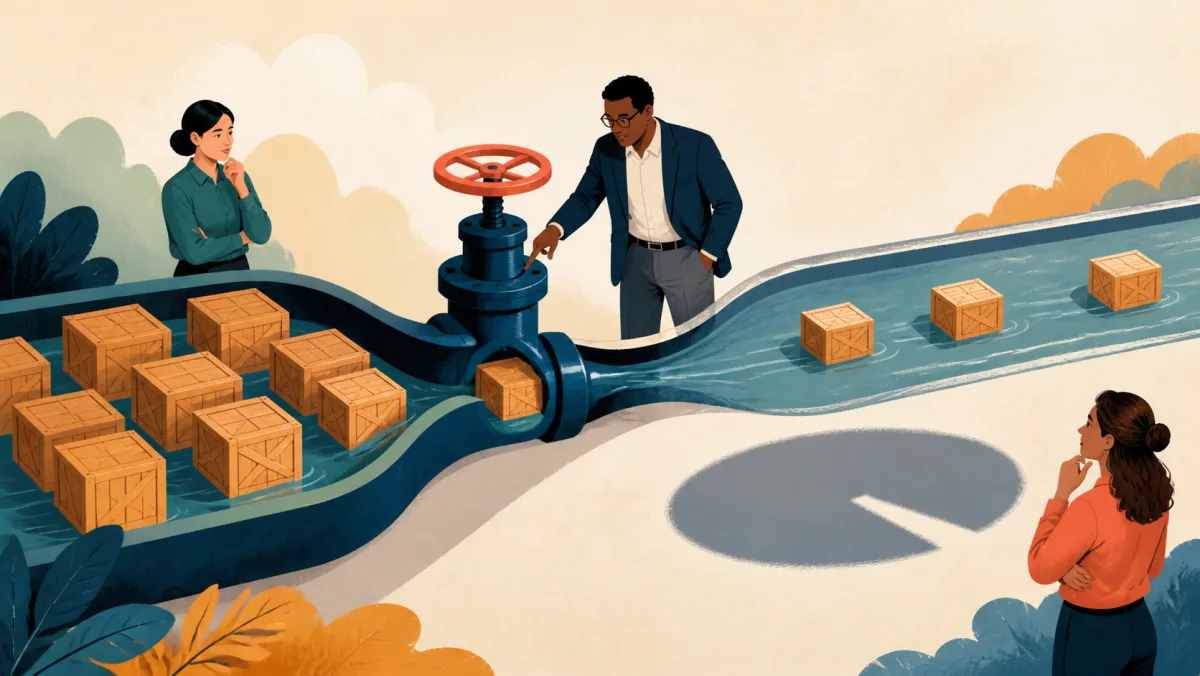
Bottleneck and delay are related, but they are not the same. Clear use helps a team report what happened and test what caused it.
A delay is a late start, late finish, or period of extra wait. A bottleneck is a step whose capacity limits the overall flow of work. A bottleneck can cause delays, a backlog, or lost output. A delay can also have other causes.
Quick check
Late once or limiting every shipment?
You know "Bottleneck" well.
Keep going with the full learning path — more workplace contexts, related expressions, and practice using it yourself with feedback.
Continue with "Bottleneck" →There's more to "Bottleneck" than it seems.
You've got part of it, but the full learning path goes deeper into its nuances, workplace contexts, and when it sounds natural — then gives you practice using it yourself.
Learn "Bottleneck" in depth →Two ends of the same problem
"'The launch was delayed by a week' reports the result. 'Legal review is limiting the flow' states a cause to test."
Reporting a delay tells readers that timing changed. Naming a bottleneck makes a stronger claim about the process. Support it with facts such as queue size, wait time, and capacity. Then name who can decide on a change and who will own the next step.
"A storm caused one flight delay. A staffed gate that serves arrivals too slowly may be a bottleneck."
A delay may happen once. A bottleneck is a limiting point, but it need not be permanent or weekly. A short loss of capacity can create one. Recurring queues make the diagnosis easier, but one event may also reveal a clear limit. Check where work built up, compare demand with capacity, and test whether that step constrained total output.
"Removing the tested bottleneck may cut future waits; the team should track the result."
The distinction separates a result from a diagnosis. A report creates shared facts, but a label alone does not fix the process. The owner can test a change, measure the flow, and record whether wait time or output improved. If not, the team should revisit the cause.
Try it yourself
Name the recurring limit at Juniper Print
Common mistakes
Mistake: using "bottleneck" when you only mean "we were late."
If you cannot point to a limiting step, resource, rule, or review, report a delay. Do not label a person as the problem. Describe the capacity, authority, or process that limited flow. Use "bottleneck" when evidence supports that cause, even if the limit was temporary.
Practice scenarios
Practice choosing between delay and bottleneck in situations like:
- reporting one late event versus a step that limits work
- explaining why a launch slipped and which cause the data support
- deciding whether an update needs a result, a tested cause, or both
Useful practice phrases:
- "[Event] was delayed by [time period]" reports what happened. "[Step] limits flow" states a cause to test.
- A one-time delay may have no bottleneck. A queue at one step may reveal one.
- Removing the tested bottleneck may reduce future delays; track the outcome.
Want to actually use "Bottleneck" naturally at work?
Understanding it is one thing. Practice its nuances, see how it works in real workplace situations, and use it yourself with feedback.
Start the "Bottleneck" learning path →A delay tells you that work or an event started late, finished late, or involved extra waiting.
A bottleneck names a point that limits flow. Evidence should show whether that point caused the delay and whether a change improved the outcome.