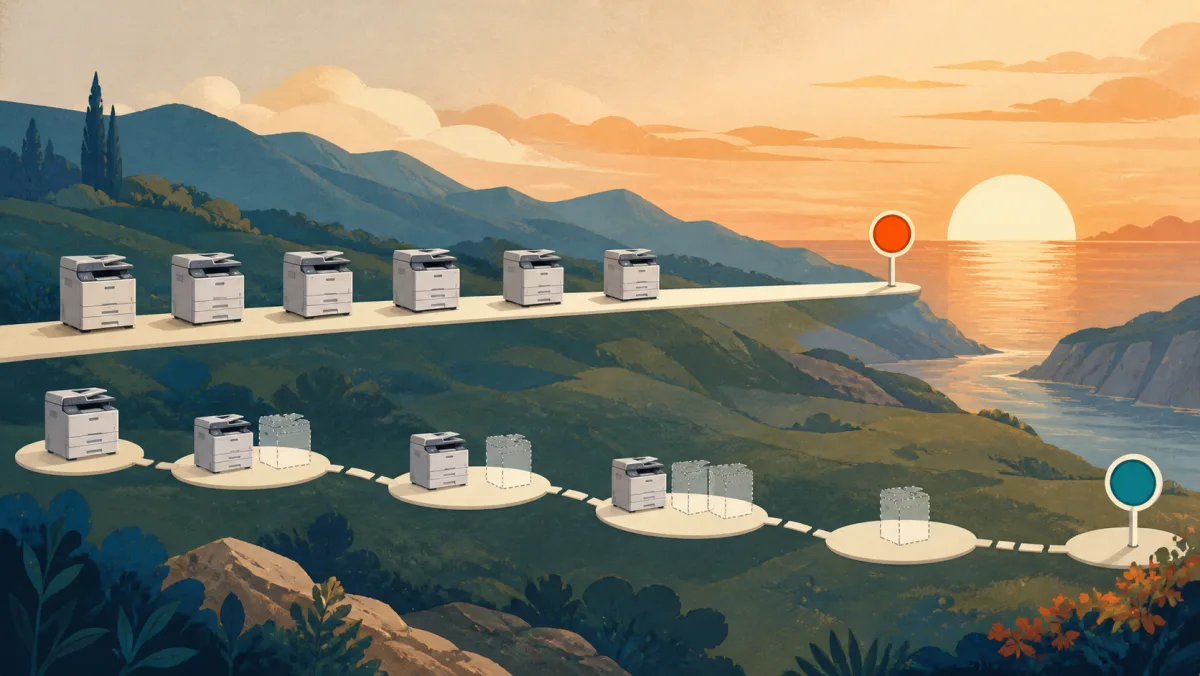
Sunset and phase out can both describe a planned ending, but only phase out clearly describes a gradual or staged ending.
Phase out means to remove or stop using something in stages. Sunset focuses on the decision to end it. A sunset may be gradual, but the word alone does not define its pace.
Quick check
Does the verb communicate stages?
You know "Sunset" well.
Keep going with the full learning path — more workplace contexts, related expressions, and practice using it yourself with feedback.
Continue with "Sunset" →There's more to "Sunset" than it seems.
You've got part of it, but the full learning path goes deeper into its nuances, workplace contexts, and when it sounds natural — then gives you practice using it yourself.
Learn "Sunset" in depth →The gradualness that isn't actually there
A sunset plan often includes communication and transition time, but the verb itself does not set a pace.
"We're sunsetting the paper expense process on July 1 -- it stops working that day, full stop."
Here, the process stops on one date without any staged reduction.
"We're phasing out the paper expense process over six months, region by region, so nobody loses access overnight."
The second sentence describes gradual implementation across regions. Phase out makes that sequence clear.
Try it yourself
Put the distinction to work
Say the pace, or borrow a word that already says it
If pace matters, state it or use phase out. A region-by-region plan is gradual, but sunset alone does not show that. You can also combine the ideas: "We will sunset the service through a six-month phaseout."
Stakeholders need dates, stages, and effects, not only a lifecycle term. Without those details, they may expect the wrong kind of cutoff.
The assumption worth unlearning
Many organizations implement sunset plans in stages. A large product may need notice, migration, and support. That pattern can make gradual change seem part of the definition. It is only one possible implementation of the decision.
Do not rely on sunset to explain pace. Add the timeline when readers need it. Compare "sunset, effective immediately" with "sunset through a six-month phaseout." Both name an end, but their timing differs.
This distinction matters most to affected stakeholders. They need time to plan for access, support, or replacement tools. A clear notice should not make them infer the pace.
Practice scenarios
Practice using sunset in situations like:
- deciding whether a sentence needs "sunset" or "phase out" to communicate the real pace
- adding explicit pacing language to a sunset announcement when the ending is staged
- catching an assumption that sunset always means gradual
Useful practice phrases:
- "We're sunsetting the paper expense process on July 1 -- full stop."
- "We're phasing out the paper expense process over six months."
- "Sunset alone doesn't say how fast this happens."
Want to actually use "Sunset" naturally at work?
Understanding it is one thing. Practice its nuances, see how it works in real workplace situations, and use it yourself with feedback.
Start the "Sunset" learning path →Sunset names a planned end. Phase out adds the idea of stages.
State the actual pace so readers do not have to guess.