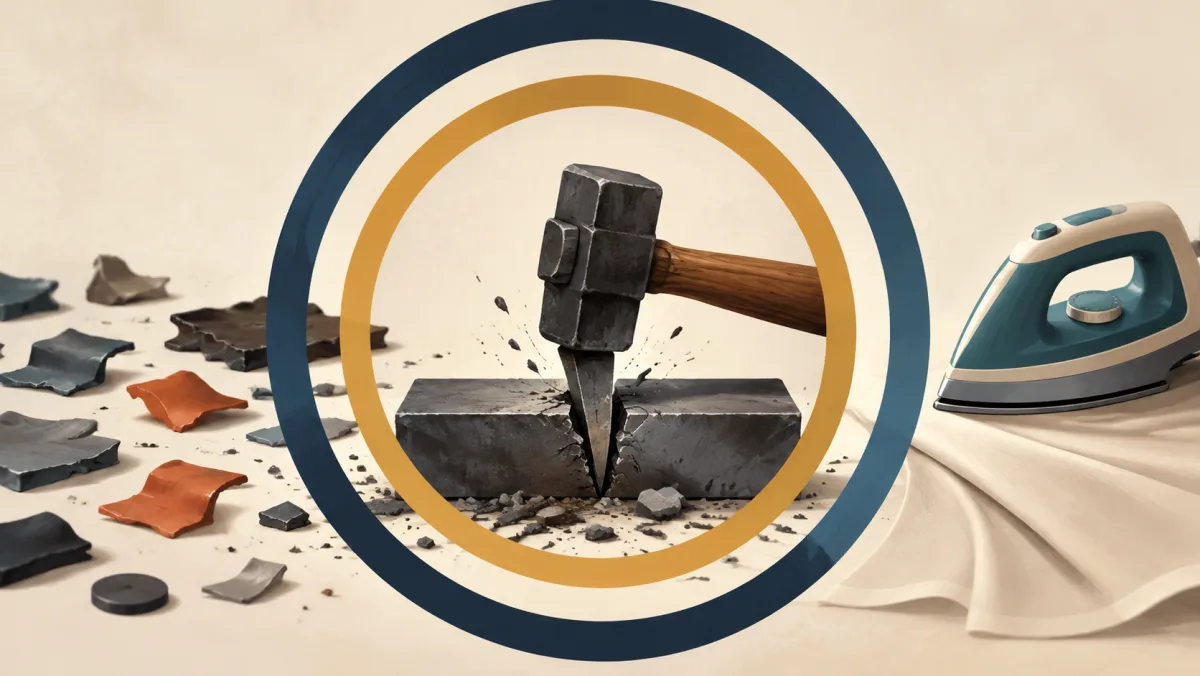
Both "iron out" and "hammer out" can describe work toward an agreement, and their meanings overlap. The main difference is usually one of emphasis.
"Hammer out" often suggests forceful or lengthy work. "Iron out" often suggests removing problems or settling details.
Quick check
Match hammer out to strenuous bargaining and iron out to calmer refinement.
You know "Iron Out" well.
Keep going with the full learning path — more workplace contexts, related expressions, and practice using it yourself with feedback.
Continue with "Iron Out" →There's more to "Iron Out" than it seems.
You've got part of it, but the full learning path goes deeper into its nuances, workplace contexts, and when it sounds natural — then gives you practice using it yourself.
Learn "Iron Out" in depth →Different levels of difficulty
"Iron out" often presents the work as smoothing problems, while "hammer out" puts more stress on effort and debate. These are shades of meaning, not firm rules. Calling a hard negotiation "ironing out" details may make the work sound easier than the speaker means.
After difficult bargaining over price, liability, and contract length, a natural sentence is "the parties still need to hammer out the core commercial terms."
Framing that same substantive disagreement as "the parties still need to iron out a few routine details" falsely downgrades it to something minor.
Same grammar, very different stakes
"The parties still need to iron out two formatting points in the agreed appendix" describes a lighter task than the disputed terms above. The sentence fits "iron out" well. Before you choose, ask what you want to stress. Use "iron out" to focus on fixing issues. Use "hammer out" to focus on the work of reaching terms.
Try it yourself
Write the accurate update for CloudNine Studios
Practice scenarios
Practice using "iron out" in situations like:
- describing the remaining problems after most terms have been settled
- distinguishing routine cleanup from a genuinely difficult bargaining session
- warning a colleague accurately about how much friction remains in a deal
Useful practice phrases:
- "The parties still need to hammer out the core commercial terms."
- "That's a formatting detail to iron out, not something to hammer out."
- "This isn't routine -- we're going to have to hammer this out."
Want to actually use "Iron Out" naturally at work?
Understanding it is one thing. Practice its nuances, see how it works in real workplace situations, and use it yourself with feedback.
Start the "Iron Out" learning path →"Hammer out" often signals effort or debate. "Iron out" often signals smoothing problems.
Match the verb to the tone you need. Neither phrase proves how hard the talks are or whether the parties will agree.