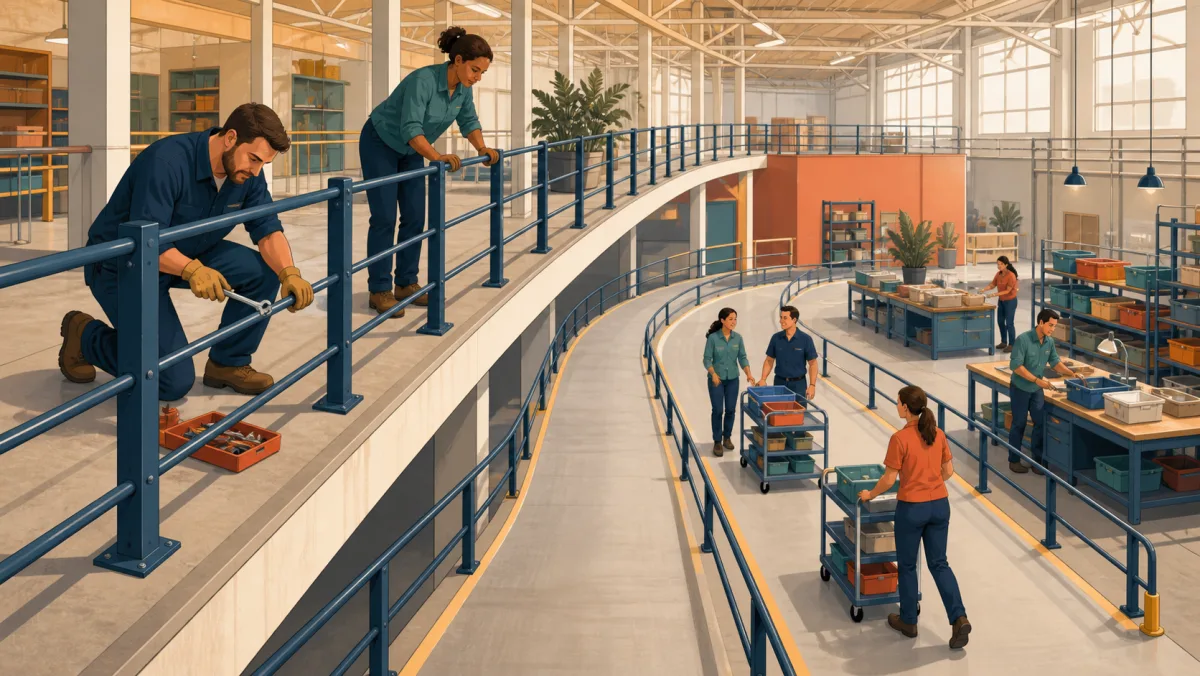
The word guardrails often carries a business metaphor. It can also name real safety barriers in workplace writing.
The metaphor comes from the physical object. A rail helps keep a car or person away from an edge. It still allows movement within a safer area. The business sense carries the same basic idea: room to act within limits. The two senses remain distinct in use.
Quick check
Repair order or policy metaphor?
You know "Guardrails" well.
Keep going with the full learning path — more workplace contexts, related expressions, and practice using it yourself with feedback.
Continue with "Guardrails" →There's more to "Guardrails" than it seems.
You've got part of it, but the full learning path goes deeper into its nuances, workplace contexts, and when it sounds natural — then gives you practice using it yourself.
Learn "Guardrails" in depth →Where the literal sense actually appears
In much office writing, "guardrails" is figurative. The literal sense is common in safety checks, site reports, and construction or warehouse notes. In those settings, the word may name a rail or a full guardrail system. The surrounding topic helps readers distinguish a safety memo from policy language.
Literal: "Facilities flagged that the loading-dock guardrail needs repair before the next inspection."
Figurative: "Sales can offer flexible payment terms within the guardrails finance approved."
"A warehouse safety memo about a damaged guardrail is a literal, physical reference -- reading it as a metaphor for company policy would be a mistake."
Context usually makes the meaning clear. A site report or inspection note may describe a physical object. Policy, strategy, delegation, and AI design often use the figurative sense. Still, the topic matters more than the document type.
Try it yourself
Make the ski report unmistakably literal
Recognition, not production
Most office workers only need to recognize the literal sense. People in facilities, safety, and construction may need to write it often. Use the literal term only for the real barrier or system. In policy writing, use the figurative term for limits that guide action.
The origin also helps explain the metaphor. "Within the guardrails" suggests room to move inside set limits. "Falls outside the guardrails" marks an action beyond those limits. But a metaphor alone does not create authority or consent. A policy should state who set the limits and what happens at the edge.
How to tell the two apart quickly
Context is the fastest signal. The same nearby words can fit both senses, so one "safety" word may not settle it. Check the speaker and topic. A report about damage, height, repair, or inspection is likely literal. A document about choices, systems, or policy is likely figurative. If the item can be touched or shown in a repair photo, it is the physical rail.
Practice scenarios
Practice using guardrails in situations like:
- telling a literal safety-rail reference apart from the business metaphor
- recognizing which workplace contexts (facilities, construction) use the literal sense
- reading a genuine facilities or safety memo correctly without treating it as figurative
Useful practice phrases:
- "Facilities flagged that the loading-dock guardrail needs repair."
- "Sales can offer flexible terms within the guardrails finance approved."
- "The warehouse memo about the damaged guardrail is literal, not a policy reference."
Want to actually use "Guardrails" naturally at work?
Understanding it is one thing. Practice its nuances, see how it works in real workplace situations, and use it yourself with feedback.
Start the "Guardrails" learning path →The business metaphor comes from the physical guardrail.
Use context to tell a safety barrier from a limit on action.